By 2026, choosing among NGS Library Preparation Kits is less about finding one universal winner and more about matching chemistry to the sample. A short-read DNA panel, a low-input RNA sample, and a long-read project place different demands on library construction. Input quantity, GC bias, adapter design, amplification, and hands-on time can all shape the result. Small details matter. A few extra pipetting steps can affect throughput across hundreds of samples.
The market context is expanding. Grand View Research estimated the global next-generation sequencing market at about USD 9.3 billion in 2023 and projected strong growth through 2030. That figure covers the wider sequencing market, not library-preparation kits alone, so it should not be read as a kit-sales forecast. Still, it signals why kit performance and workflow compatibility deserve careful comparison. For an expert perspective, NHGRI Director Dr. Eric Green has said, “Genomics is now an integral part of biomedical research.” This broad observation is not a kit recommendation; it underscores the growing importance of reliable sequencing workflows.
This guide compares leading 2026 kits by sample type, input range, library yield, workflow time, automation compatibility, and published validation. Manufacturer specifications are useful, but they are not the whole story. Independent evaluations may use different samples and performance measures. That leaves room for uncertainty. The best choice depends on the assay, the lab’s equipment, and the evidence behind each claim.

NGS library preparation kits convert DNA or RNA into fragments that a sequencer can read. The exact workflow depends on sample type, input amount, and sequencing platform. Most protocols include nucleic acid preparation, fragmentation or target selection, adapter ligation, and amplification when needed. Adapters provide the sequences that let fragments attach to a flow cell and be identified during sequencing.
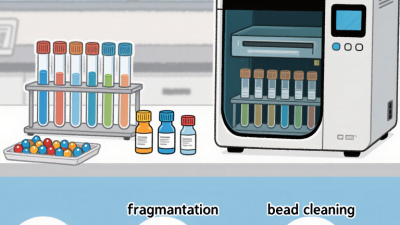
For DNA samples, fragmentation creates pieces of a more suitable size, often through enzymes or focused energy. End repair and adapter ligation prepare those fragments for sequencing. RNA workflows typically add a reverse-transcription step to create complementary DNA. Some kits enrich selected genes or remove unwanted material. Each added step can affect yield and representation, so the simplest workflow that fits the study may be preferable. Small losses matter.
Hands-on work calls for careful pipetting, clean work areas, and consistent timing. After preparation, researchers commonly assess fragment size and concentration before pooling libraries. A library can look acceptable yet still perform unevenly, so sequencing controls and validated lab procedures remain useful. Kit instructions are not a substitute for checking sample quality. I have seen tiny handling differences complicate comparisons; that is easy to overlook, and worth reviewing before a large batch.
In 2026, the best library preparation kit is the one that fits your sample, platform, and study design. Grand View Research’s 2024 industry report valued the global next-generation sequencing market at about US$10.3 billion in 2023. It projected 16.4% annual growth through 2030, reflecting increasingly varied sequencing workflows. That growth makes direct, like-for-like kit comparisons more useful than headline yield claims.
Assess DNA or RNA input requirements, conversion efficiency, fragment-size consistency, adapter-dimer levels, and hands-on time. Check performance across low-input, degraded, and routine samples—not only ideal material. NIST Genome in a Bottle reference materials can support evaluation of variant-calling performance, while replicate runs help expose batch variability. Record usable library yield and sequencing quality together; yield alone can look impressive while masking uneven coverage. No kit is perfect. Local validation may still miss a rare sample type.
Tips: Run the same samples through candidate workflows, then compare library size traces, failed-library rates, and per-sample costs. Keep one reference sample in each batch. It catches drift. Also ask suppliers for independent performance data, not just polished application examples. A small pilot is useful, though it cannot represent every future sample.
In 2026, the best NGS library preparation kit depends on the sequencing goal, sample type, and available DNA. There is no universal winner. Whole-genome sequencing kits should preserve broad genomic representation while producing libraries with consistent fragment sizes. For a typical workflow, check DNA input requirements, adapter compatibility, indexing options, and performance with GC-rich regions. Uneven coverage can hide important variants, even when a library passes routine quality checks.
Targeted sequencing kits are designed around focused panels, such as selected genes or genomic regions. Their enrichment method, probe design, and tolerance for degraded samples can strongly affect coverage uniformity and duplicate reads. Compare how well each workflow covers difficult regions, not just its advertised target size. Also consider hands-on time and repeatability across batches. A comparison chart alone can mislead; validation with your own sample types may change the ranking. Small details matter.
Tips: Match the kit to your DNA quality and panel design. Test representative samples, inspect coverage gaps, and confirm that library yields fit your sequencer’s input range.
Top Kits for RNA-Seq, Single-Cell, and Specialized Applications
The best library preparation kit depends on the sample and the question. For RNA-seq, compare poly(A) selection with ribosomal RNA depletion. Poly(A) methods suit many intact, messenger-RNA-focused samples. Depletion can preserve a broader range of RNA, including material from degraded samples. Check strand specificity, input requirements, and expected read length before choosing. Small details matter.
Small details matter.
Single-cell workflows need reliable cell or nucleus capture, barcode assignment, and unique molecular identifiers. These features help distinguish individual transcripts and reduce amplification bias. Yet no kit can fully correct poor tissue handling, high ambient RNA, or excessive doublets. A pilot run with a few representative samples can reveal issues before a larger study. Results vary.
Specialized applications call for closer scrutiny. Low-input, fixed-tissue, small-RNA, and targeted workflows may each require different capture or cleanup steps. Review the kit’s compatibility data, controls, and published performance on samples similar to yours. Tips: Record input mass, RNA quality, reagent lot, and handling time. Include a no-template control where appropriate, and compare replicate libraries. A kit that performs well on clean reference RNA may behave differently with a tiny, unevenly degraded biopsy. Keep that possibility in view.
Choosing a library preparation kit starts with the sample, not the catalog. Check whether your material is genomic DNA, RNA, single cells, or another input, then confirm the kit’s validated input range. A kit that works well with intact DNA may struggle with fragmented or low-yield samples. Match the workflow to your sequencing plan, too: paired-end reads, target enrichment, or whole-genome sequencing can require different preparation steps. Small details matter. For example, a limited sample may not tolerate repeated cleanup or extra transfer steps.
Tips: Compare hands-on time, reaction scale, indexing options, and instrument compatibility. Check how the kit handles duplicates and adapter dimers, and review its documented performance on samples like yours. Run a small pilot when possible. It costs time, but can reveal problems before a full study.
Throughput also shapes the choice. A manual workflow may suit a few samples, while larger batches benefit from consistent, automation-ready steps. Read the protocol closely, including storage needs and quality-control checkpoints. Measure library size and concentration before sequencing; these checks help flag uneven preparation. It is tempting to choose the shortest workflow, but fewer steps do not always mean fewer failures. Results can vary with sample quality, operator technique, and downstream analysis, so treat published performance as a guide—not a guarantee.
| Library preparation approach | Typical sample input | Best suited for | Key strengths | Main trade-offs | Selection considerations |
|---|---|---|---|---|---|
| DNA ligation-based, PCR-free | Usually about 100 ng to 1 µg of relatively intact DNA; requirements vary by workflow. | Whole-genome sequencing when DNA quantity and quality are sufficient. | Avoids amplification-related sequence and GC bias; can provide more even representation and fewer PCR duplicates. | Requires more input DNA and may be less suitable for highly degraded or very limited samples. | Check DNA integrity, input requirements, insert-size targets, and whether the workflow supports the intended sequencing platform. |
| DNA ligation-based, PCR-enriched | Often suitable from low nanogram quantities to higher inputs, depending on the specific workflow. | Whole-genome sequencing, exome sequencing, and other DNA sequencing projects with limited input. | Works with lower DNA quantities and supports broad sequencing applications. | PCR can introduce amplification bias and duplicates, particularly with low-complexity or damaged samples. | Consider the number of PCR cycles, expected library complexity, sample quality, and whether unique molecular identifiers are needed. |
| Tagmentation-based DNA preparation | Often uses low nanogram to tens-of-nanograms input; exact requirements depend on the assay. | Rapid whole-genome sequencing, targeted sequencing, and some chromatin-accessibility workflows. | Combines DNA fragmentation and adapter addition, reducing workflow time and hands-on steps. | Fragment-size distribution and sequence representation can be sensitive to input amount and DNA quality. | Confirm that the method is validated for the sample type and assay; use consistent DNA quantification and input amounts. |
| Stranded mRNA preparation with poly(A) enrichment | Commonly tens of nanograms to about 1 µg of total RNA, subject to the workflow and sample condition. | Gene-expression profiling of eukaryotic samples with intact or moderately intact RNA. | Enriches polyadenylated transcripts and preserves transcript orientation, helping with strand-specific analysis. | Can under-represent non-polyadenylated RNA and may perform poorly with heavily degraded RNA. | Assess RNA integrity, organism type, transcript goals, and whether poly(A) selection is appropriate for the target RNA population. |
| Stranded total RNA preparation with rRNA depletion | Can accommodate low-input or partially degraded RNA in some workflows; input limits vary widely. | Samples where non-polyadenylated transcripts, coding RNA, or degraded RNA are important. | Reduces ribosomal RNA while retaining a broader range of RNA species than poly(A) enrichment. | Depletion efficiency can vary by species and sample type; residual rRNA may consume sequencing reads. | Verify species coverage, degradation tolerance, strandedness, and compatibility with the intended RNA source. |
| Small RNA preparation | Typically uses tens to hundreds of nanograms or more of total RNA, depending on sample type and workflow. | Profiling microRNAs and other short RNA molecules. | Designed to capture short inserts that standard RNA workflows may not retain efficiently. | Adapter-ligation bias and insert-size selection can affect which small RNAs are represented. | Check the target size range, adapter-bias controls, sample input, and whether the analysis requires precise small-RNA quantification. |
| Amplicon-based targeted preparation | Often works with low nanogram quantities of DNA or cDNA; assay-specific input limits apply. | Sequencing defined gene panels, viral regions, or other selected genomic targets. | Focuses reads on regions of interest and can support efficient sequencing of many samples. | Only interrogates designed targets; primer bias and uneven amplification can affect coverage. | Review target coverage, primer design, expected variant types, sample quality, and controls for amplification artifacts. |
How to choose: Start with the analyte, sample quality, and available input. Then match the workflow to the target molecules, desired strandedness, sequencing platform, and downstream analysis. Input ranges are typical examples rather than universal specifications; consult the validated protocol for the chosen workflow and sample type.