What Are the 2026 Best Genomic DNA Preparation Kits?
Choosing the right Genomic DNA Preparation kit in 2026 is not a simple matter of comparing package prices. A reliable kit must deliver intact, pure DNA from the sample types your laboratory actually handles. Blood, saliva, tissue, plant material, and microbial cultures each create different extraction challenges. Some kits produce clean DNA quickly. Others preserve longer fragments but require more hands-on work.
Sydney Brenner, a pioneering molecular biologist, once said, “Progress in science depends on new techniques, new discoveries and new ideas, probably in that order.” His words remain relevant here. Better preparation methods can influence sequencing quality, PCR consistency, long-read performance, and downstream storage. A visible pellet, a stable A260/A280 ratio, and minimal shearing are practical signs of success. They are not the whole story.
No kit is perfect.
This guide examines the 2026 best Genomic DNA Preparation kits through an evidence-based lens. It considers yield, purity, fragment length, processing time, scalability, automation, safety, and total cost per usable sample. It also looks beyond marketing claims. Independent validation, clear protocols, and reproducible results matter more than impressive specifications alone. A kit may perform well in a manufacturer’s example and disappoint with a difficult specimen. That possibility deserves attention.
The strongest choice depends on your workflow, not popularity. Researchers should compare real sample requirements, instrument compatibility, technician time, and storage conditions before purchasing. Even experienced laboratories can overlook inhibition or gradual DNA degradation. Careful testing remains necessary.
What Makes a Genomic DNA Preparation Kit Effective in 2026
What Makes a Genomic DNA Preparation Kit Effective in 2026
An effective genomic DNA preparation kit must deliver clean, intact DNA across varied sample types. In practical laboratory work, purity is not enough. A clear extract may still contain inhibitors that weaken amplification or sequencing results. Reliable kits remove proteins, salts, pigments, and other contaminants without excessive handling.
DNA integrity matters more as long-read sequencing and complex analysis become common. Strong protocols protect high-molecular-weight DNA during mixing, washing, and elution. Gentle processing helps preserve long fragments. Small elution volumes also reduce unnecessary concentration steps. That saves time.
Reproducibility remains a major test. The same sample should produce comparable results across operators and working days. Clear instructions, stable reagents, and simple visual checkpoints support that goal. Good kits should also offer flexible input amounts, scalable workflows, and compatibility with manual or automated systems. Traceable lot information strengthens laboratory records. Useful quality controls matter too, such as concentration checks, absorbance ratios, and fragment-size assessment.
No kit is perfect. Some protocols promise speed but sacrifice yield with difficult samples. Others produce excellent DNA but require too many transfers. I have found that small workflow details can create large differences, especially with viscous lysates. A practical kit should reduce those weak points, not hide them. Transparent limitations are more trustworthy than impressive claims.
How Genomic DNA Kits Differ by Sample Type and Extraction Method
The best genomic DNA preparation kit in 2026 will depend less on marketing claims and more on sample type. Blood usually needs gentle lysis, protein removal, and consistent leukocyte recovery. Tissue samples often require mechanical disruption before chemical extraction. Plant material adds polysaccharides and phenolic compounds, which can inhibit downstream amplification. Saliva is convenient, but its microbial content may reduce human DNA purity.
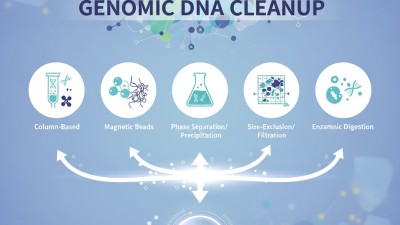
According to Grand View Research’s 2024 analysis, the nucleic acid isolation and purification market is expected to grow strongly through 2030, driven by clinical testing, biobanking, and research demand. This growth reflects a practical issue: laboratories need kits matched to workflow, not universal solutions. Silica-column methods are familiar and relatively affordable. Magnetic-bead extraction offers automation, scalable throughput, and fewer transfer steps. Organic extraction can produce high molecular-weight DNA, but it requires more handling and stricter safety controls.
Extraction method changes DNA performance. For long-read sequencing, gentle processing and limited vortexing help preserve fragment length. For routine PCR, moderate purity may be sufficient. The 2023 NIST Genome in a Bottle benchmarking work also showed that library preparation and sequencing quality depend heavily on input DNA integrity. I have seen clean-looking eluates fail because tissue was under-disrupted. That detail is easy to miss. A kit can be technically excellent, yet poorly suited to the sample. My own preference would be to compare yield, A260/280 ratio, fragment size, inhibitor carryover, and hands-on time before choosing a 2026 workflow.
Key Criteria for Comparing DNA Yield, Purity, Integrity, and Speed
What Are the 2026 Best Genomic DNA Preparation Kits?
The best kit depends on the downstream assay, not its advertised yield. For short-read sequencing, clean DNA may matter more than maximum recovery. For long-read work, molecular integrity becomes decisive. Many core laboratories target an A260/280 ratio near 1.8 and an A260/230 ratio between 2.0 and 2.2. These ranges support the purity guidance used in common nucleic-acid quality workflows. The MIQE guidelines also stress documenting concentration, purity, and inhibition risks, rather than trusting one measurement. I have seen impressive yields fail after library preparation. That remains an expensive surprise.
Compare yield using the same input mass and elution volume. Report recovery in micrograms, not only concentration. For integrity, inspect a fragment analyzer or pulsed-field gel when long DNA matters. Many long-read protocols prefer fragments above 50 kb, while routine PCR can tolerate shorter molecules. The 2024 ISBER Best Practices emphasize controlled handling, traceability, and repeated quality checks. NIST genomic DNA reference materials can help laboratories verify measurement consistency. Still, no kit wins every metric. Speed may also increase shearing or carryover.
Tips: Run a small pilot with five representative samples. Record hands-on time, failed extractions, and freeze-thaw cycles. Use blank controls for contamination checks. Reconsider the kit when DNA looks pure but performs poorly in library preparation.
Step-by-Step Workflow for Using Genomic DNA Preparation Kits
Genomic DNA preparation begins with sample identification, clean gloves, and a documented extraction plan. Lyse cells gently, then remove proteins and inhibitors through binding, washing, and elution. Avoid vigorous mixing, because long DNA molecules can shear. The National Human Genome Research Institute reports that sequencing costs fell from about $100 million in 2001 to roughly $1,000 in 2022. That progress makes sample quality even more important. Expensive sequencing cannot repair poor extraction.
Measure concentration with a fluorometric method, then check purity using absorbance ratios. A 260/280 value near 1.8 often indicates acceptable DNA purity, but it is not proof of integrity. Run a small aliquot on an agarose gel when high-molecular-weight DNA matters. In my experience, a clear solution can still contain inhibitors. I sometimes repeat the wash step after seeing weak amplification, although over-washing can reduce yield. The Genome in a Bottle Consortium’s reference materials also show why standardized quality checks improve confidence in downstream variant analysis.
Tips: Let the sample thaw gradually, record every incubation time, and use low-binding tubes. Keep DNA cold during handling. Do not vortex the final eluate. If the yield is low, inspect the input material before changing the entire workflow. A failed extraction is data, not just waste.
What Are the 2026 Best Genomic DNA Preparation Kits? - Step-by-Step Workflow for Using Genomic DNA Preparation Kits
| Kit Format / Workflow |
Typical Sample Types |
Typical Elution Volume |
Expected DNA Yield* |
Typical Purity Target |
Approximate Hands-on Time |
Best Use Case |
| Silica Spin-Column Kit |
Whole blood, cultured cells, saliva, soft tissue |
50–200 µL |
2–30 µg per preparation |
A260/280: 1.8–2.0; A260/230: 1.8–2.2 |
25–45 minutes |
Routine PCR, genotyping, sequencing library preparation |
| Magnetic-Bead Kit |
Blood, buccal swabs, tissue, environmental samples |
50–200 µL |
1–25 µg per preparation |
A260/280: 1.8–2.0; A260/230: ≥1.8 |
30–60 minutes manually; shorter with automation |
Medium- to high-throughput processing and automation |
| High-Molecular-Weight DNA Kit |
Fresh blood, cells, tissue, high-quality biological specimens |
100–500 µL |
5–100 µg per preparation |
A260/280: 1.8–2.0; minimal fragmentation |
60–120 minutes |
Long-read sequencing, optical mapping, large-fragment analysis |
| Plant Genomic DNA Kit |
Leaves, seeds, roots, plant tissue rich in polysaccharides |
50–200 µL |
1–20 µg per preparation |
A260/280: 1.8–2.0; A260/230: ≥1.8 |
45–90 minutes |
Plant genotyping, barcoding, PCR and sequencing |
| Microbial DNA Kit |
Bacterial cultures, fungi, mixed microbial samples |
30–100 µL |
0.5–10 µg per preparation |
A260/280: 1.7–2.0; low inhibitor carryover |
30–60 minutes |
Microbial identification, whole-genome sequencing and PCR |
| Low-Input / Forensic-Style Kit |
Swabs, dried blood, hair roots, trace biological material |
20–100 µL |
10 ng–2 µg per preparation |
Sample-dependent; inhibitor-free DNA is prioritized |
45–90 minutes |
Limited or degraded specimens requiring maximum recovery |
*Yield ranges are general laboratory expectations and vary with sample input, organism, tissue condition, lysis efficiency and elution volume. Always verify performance using the kit’s current protocol.
Step-by-Step Workflow for Genomic DNA Preparation Kits
| Step |
Workflow Stage |
Recommended Action |
Key Quality Consideration |
| 1 |
Sample preparation |
Collect the recommended sample amount and keep it cold unless the protocol specifies another storage condition. |
Avoid repeated freeze-thaw cycles and cross-contamination. |
| 2 |
Cell or tissue lysis |
Add lysis buffer and proteinase according to the validated protocol; incubate until the sample is visibly disrupted. |
Incomplete lysis lowers yield; excessive vortexing can shear high-molecular-weight DNA. |
| 3 |
Binding preparation |
Add binding solution or alcohol as directed and mix thoroughly without creating excessive foam. |
Incorrect binding chemistry may cause DNA loss or inhibitor carryover. |
| 4 |
DNA capture |
Load the lysate onto a silica membrane or magnetic beads and apply the specified centrifugation or mixing conditions. |
Do not exceed column capacity; allow magnetic beads to collect completely before aspiration. |
| 5 |
Wash |
Perform the required wash steps using prepared wash buffer, followed by a complete drying spin or drying period. |
Residual ethanol can inhibit PCR and reduce A260/230 readings. |
| 6 |
Elution |
Apply warm elution buffer or nuclease-free water, allow sufficient contact time, and recover the DNA. |
Smaller elution volumes increase concentration; larger volumes may improve total recovery. |
| 7 |
DNA assessment |
Measure concentration with a fluorometric or equivalent method and assess purity by absorbance ratios. |
Absorbance alone may overestimate DNA when RNA, proteins or other contaminants are present. |
| 8 |
Integrity and storage |
Check integrity by gel or fragment analysis when required, then store DNA under validated conditions. |
Use short-term refrigerated storage and long-term frozen storage; minimize freeze-thaw cycles. |
How to Choose the Best Kit for Research and Diagnostic Applications
Choosing a genomic DNA kit in 2026 should begin with the sample, not the catalogue. Blood, saliva, tissue, and FFPE material require different lysis and inhibitor-control strategies. For research, compare yield, fragment length, throughput, and cost per usable sample. High yield can still hide sheared DNA or residual ethanol. The WHO Global Genomic Surveillance Strategy, published in 2023, emphasizes standardized workflows, quality controls, and interoperable data. That principle matters before sequencing begins.
Diagnostic applications need stricter evidence. Check extraction controls, lot consistency, traceability, contamination safeguards, and compatibility with validated assays. ISO 15189:2022 emphasizes documented processes, competence, and method verification. A kit may perform well in one matrix but fail in another. Do not accept performance claims without local verification. Test precision across operators, days, and concentration ranges. Include negative controls and extraction blanks. These steps feel slow. They prevent expensive retesting.
Tips: Run a small head-to-head pilot before buying at scale. Measure concentration, purity ratios, fragment integrity, and PCR performance. A 2024 industry market analysis projected the nucleic-acid isolation and purification market to grow by more than 8% annually through 2030, increasing product choice and marketing noise. Record every deviation. Also question your own protocol. Over-drying a column, for example, can reduce recovery even when the kit is suitable.