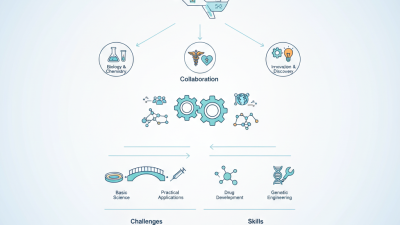
Why Do Global Buyers Need Life Science Experts?
Global buyers in life sciences rarely purchase ordinary products. They evaluate evidence, quality systems, manufacturing controls, and long-term risk. A supplier may present polished specifications, yet one missing validation record can change the decision. This is where Life Science Experts add practical value.
These professionals connect scientific detail with commercial reality. They can review assay performance, interpret stability data, and question unclear claims. They may also assess supplier audits, batch records, cold-chain handling, and change-control procedures. Their experience helps buyers compare partners across different markets without treating every country as identical. Regulations, documentation practices, and clinical expectations can vary considerably.
A strong expert does not promise certainty. No specialist sees every risk. Good judgment requires verified records, current standards, and conversations with technical teams. An expert might notice that a temperature logger was placed near a package door, not beside the product. That small detail could affect confidence in shipment data. Buyers still need independent review and internal accountability. Expertise supports decisions; it does not replace them. For this reason, selecting credible Life Science Experts matters. Look for transparent methods, relevant industry experience, and evidence of careful work. The best guidance is clear, cautious, and useful when pressure is high. Sometimes, a second opinion is necessary. Global purchasing deserves more than attractive presentations. It needs informed questions, reliable evidence, and people who understand what happens after the contract is signed.

Define Life Science Expertise in a $1.7 Trillion Global Medicines Market
In a $1.7 trillion global medicines market, buying decisions carry more than a price tag. They involve quality, evidence, supply continuity, and patient safety. Life science expertise means understanding how a medicine moves from laboratory data to reliable delivery. A capable expert can examine manufacturing controls, stability results, clinical evidence, and regulatory documents. They can also ask uncomfortable questions when a supplier’s claims sound polished but incomplete. That practical judgment protects budgets and public health.
Global buyers often face different rules, languages, and storage conditions. A shipment may require temperature monitoring, validated packaging, and clear release records. An expert checks these details before a contract is signed. They compare specifications, review audit findings, and identify gaps in pharmacovigilance or change control. Experience matters here. A spreadsheet cannot reveal every operational weakness. No assessment is flawless. Strong professionals document assumptions, disclose uncertainty, and revisit decisions when new evidence appears. That honesty builds trust more effectively than confident promises.
Tips: Ask for traceable evidence, not attractive brochures. Confirm manufacturing standards, batch documentation, transport validation, and complaint procedures. Define who owns each quality decision. Test communication with a small, controlled project before expanding cooperation. Keep an independent review for high-risk purchases. Small checks prevent expensive surprises. Maybe too many checks slow procurement, but skipping them can cost far more.
Compare Regulatory Pathways Across FDA, EMA, and China’s NMPA
Why Do Global Buyers Need Life Science Experts?
Comparing Regulatory Pathways Across FDA, EMA, and China’s NMPA
Global buyers need more than a product brochure. They need a clear regulatory map before investing in a life science product. The pathway changes with product classification, risk level, intended use, and available evidence.
In the United States, the FDA may use a 510(k), De Novo, or premarket approval route for medical devices. Each option demands different evidence and review expectations.
In Europe, the EMA supports centralized authorization for many medicines, while some products follow national or decentralized procedures. Medical devices generally require conformity assessment under Europe’s current framework.
China’s NMPA uses classification-based registration, with local documentation, testing, and clinical evidence sometimes required.
The comparison is not perfectly symmetrical. That matters. A clinical package accepted in one region may need additional analysis elsewhere. Reviewers may examine endpoints, manufacturing controls, labeling language, and post-market plans differently. A product file can look complete yet fail because its intended use is unclear.
Experienced life science experts test these gaps early. They compare submission timelines, evidence standards, local representation, and change-control duties. They also check whether supplier records support traceability. One overlooked translation can delay a technical review. One unverified assumption can distort the budget. Regulatory strategy should therefore be evidence-led, region-specific, and open to revision as authorities update their requirements.
Apply GMP, GDP, and GCP Standards to Cross-Border Supplier Due Diligence
Global buyers often assess price, capacity, and delivery dates. Yet regulated life science sourcing demands deeper questions. A supplier may look reliable online, while its batch records remain incomplete or its temperature logs contain gaps. Life science experts connect commercial claims with operational evidence.
Under GMP, due diligence examines validated processes, deviation handling, change control, and data integrity. Ask for recent audit findings, training records, and sample certificates of analysis. Do not accept polished documents alone. Walk through one batch from incoming materials to release. Small inconsistencies matter. A missing signature can signal weak controls, or simply poor document practice. It still deserves investigation.
GDP adds another layer to cross-border movement. Review lane mapping, qualified carriers, warehouse conditions, and temperature excursions. Test how the supplier responds when a shipment arrives warm. Under GCP, clinical suppliers need documented oversight, participant safety awareness, protocol training, and reliable essential records. Check subcontractors too. They are easy to overlook. Experts compare procedures with actual behavior through interviews, remote reviews, and justified onsite assessments. Country-specific requirements may differ, so a universal checklist can mislead. No checklist is perfect. Risk ratings should be revisited after major changes, complaints, recalls, or ownership transfers. Good judgment remains necessary, even when the spreadsheet says “approved.”
Assess How Experts Reduce Risk in Complex Life Science Transactions
Global life science transactions rarely fail because of one obvious issue. Risk often hides in technical files, supply assumptions, and operational details. Life science experts reduce that risk by testing claims against evidence, not presentation language. They examine product history, manufacturing controls, clinical data, intellectual property, and market access conditions. Their questions are practical: Can the facility repeat the process? Are critical materials available? Do the data support the proposed use? Experienced experts also separate verified facts from optimistic forecasts. That distinction can change a valuation or pause a rushed deal.
During diligence, specialists may trace one batch record from incoming materials to release testing. They review deviation reports, stability results, validation protocols, and change-control decisions. A spreadsheet can look clean. The underlying records may show delays, recurring failures, or weak documentation. Site discussions add another layer. Operators often reveal practical constraints that formal reports omit, such as limited equipment capacity or fragile temperature-controlled handoffs. Experts then connect these findings to contractual protections, timelines, budgets, and approval requirements. They do not replace legal counsel or scientific reviewers. They help each group see the same risk clearly.
Good advisers also manage uncertainty. They build scenarios for supply interruption, delayed studies, quality remediation, or changing access conditions. They explain which assumptions are strong and which remain untested. No review is flawless. Teams can overvalue familiar evidence or overlook a quiet warning. Independent challenge matters, especially when commercial pressure is high. A careful expert documents open questions, assigns owners, and sets evidence-based decision points. The process may feel slower, but it makes surprises more visible before money, time, and patient trust are committed.