
Why Choose Stainless Steel Syringes for Your Business?

Choosing the right syringe can affect accuracy, workflow, and equipment costs. Stainless Steel Syringes are valued in business settings where durable, repeatable dispensing matters. Their rigid metal barrels can withstand frequent handling, while a well-fitted plunger supports controlled movement. In a busy workshop or laboratory, that can mean fewer interruptions to replace worn tools. Small details matter.

A purchasing decision should still start with the task, not the material alone. Consider the required capacity, nozzle design, fluid viscosity, and contact compatibility. Stainless steel grades and syringe construction vary, so check manufacturer specifications before ordering. Some fluids may require different materials or dedicated equipment. Cleaning and sterilization suitability also depend on the model and the procedures your operation can reliably follow. This deserves attention.

For teams comparing options, evaluate precision, service life, maintenance needs, and the availability of replacement parts. Ask suppliers for documentation and clear guidance on intended use. Where possible, test a sample with the actual fluid and dispensing process before committing to a large order. Results may differ from expectations. No syringe is ideal for every application, and steel construction alone does not guarantee accuracy or long-term value. A careful comparison helps businesses identify where Stainless Steel Syringes fit—and where another design may serve better.
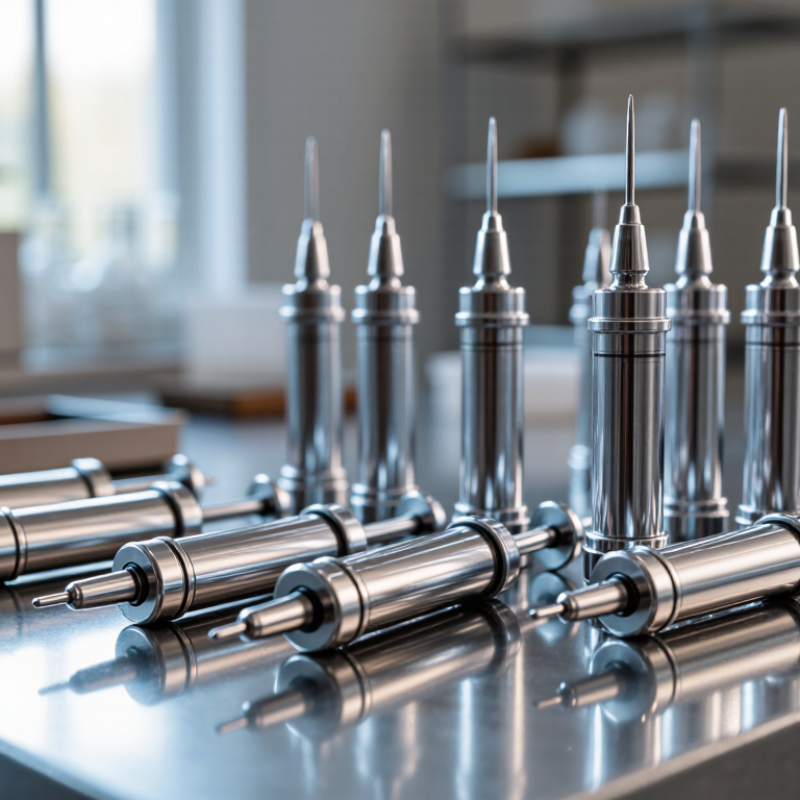
Why Choose Stainless Steel Syringes for Your Business?

What Stainless Steel Syringes Are and How They Work

A stainless steel syringe is a precision tool for measuring and dispensing liquid. Its barrel is made partly or entirely of stainless steel, while the plunger moves inside to control flow. Designs vary: some use a metal-to-metal fit, while others rely on seals to reduce leakage. A small detail is easy to miss.

To draw liquid, the operator pulls the plunger back, creating lower pressure inside the barrel. The pressure difference moves liquid through the tip. Pushing the plunger raises pressure and sends the measured amount out. Markings on the barrel help track volume, but their readability and precision differ between models. Check the scale before choosing one.

In business settings, these syringes can handle repeated dispensing tasks, such as transferring compatible oils or laboratory liquids. Stainless steel resists corrosion in many conditions and can tolerate frequent cleaning, though it is not compatible with every fluid or cleaning method. Metal is not automatically better. Confirm material compatibility, seal type, volume range, and the manufacturer’s cleaning instructions before putting a syringe into regular use.

Key Materials and Design Features

Stainless steel syringes can suit businesses that need durable, accurately controlled fluid dispensing. The material resists corrosion better than many common metals, but performance depends on the steel grade, surface finish, and the substances being handled. Ask for material specifications, not just a general “stainless steel” claim. A smooth barrel can make cleaning easier, while precise graduations and a well-fitted plunger support repeatable dosing. Small details matter.

Tips: Match the syringe’s seals and fittings to the fluid and operating temperature. Confirm that cleaning or sterilization methods are compatible with the complete assembly. Check documentation for material grade, tolerances, and intended use. Not every setup fits.

Design choices affect day-to-day work. A low-dead-space tip can reduce leftover material, and a sturdy connection can help prevent leaks during routine handling. Still, a steel body alone does not guarantee accuracy or long service life. Inspect the plunger’s movement, check graduations against your process needs, and test a sample under real working conditions. I would avoid assuming that a heavier syringe is automatically better; weight can make repeated use less comfortable. A short trial may reveal issues that a specification sheet misses.

Why Choose Stainless Steel Syringes for Your Business? — Key Materials and Design Features

304 and 316L stainless steel offer different material characteristics for reusable equipment design. 316L contains molybdenum, which can improve resistance to chloride corrosion compared with 304. The chart shows ASTM A240/A240M minimum strength requirements for annealed plate, sheet, and strip—not syringe-specific performance ratings. Actual component performance depends on product form, processing, design, and use conditions.

Business Benefits and Common Applications

Stainless steel syringes can suit businesses that need controlled dispensing, sampling, or repeated dosing. Their rigid barrels resist dents better than many disposable alternatives. When designed for cleaning and sterilization, they can support repeated use. That matters. Durable equipment may reduce replacement frequency, though actual savings depend on purchase price, maintenance, and service life. Stainless steel is not resistant to every chemical, so material compatibility still needs checking.

Common applications include laboratory liquid handling, industrial fluid sampling, and measured dispensing of oils or other compatible liquids. In production settings, a metal barrel can be useful when handling thicker fluids or when a sturdy tool is needed for frequent work. Clear graduations, smooth plunger movement, and secure fittings help staff dispense consistently. But accuracy also depends on calibration, operator technique, and regular inspection. These syringes are not automatically the best choice for every task.

Tips: Match the syringe material and seal to the fluid. Check the manufacturer’s cleaning and sterilization instructions, then inspect for corrosion, leaks, or a stiff plunger before use. A quick trial with the actual fluid can reveal issues early.

Why Choose Stainless Steel Syringes for Your Business? — Business Benefits and Common Applications

Business Benefit or Application Typical Use Why Stainless Steel Can Be Suitable Practical Consideration
Durability for repeated use Repeated dispensing in workshops, laboratories, and production settings A metal barrel can withstand routine handling and is less prone to cracking than many plastic alternatives. Service life depends on construction, seals, cleaning practices, and the fluids being handled.
Cleanability and reuse Operations that clean and reuse dispensing equipment between jobs or batches Smooth stainless steel surfaces can generally be washed and inspected, subject to the syringe design and cleaning procedure. Confirm that seals and other components tolerate the selected cleaning agents and temperatures; follow applicable hygiene procedures.
Corrosion resistance Handling compatible liquids in laboratories, maintenance, or process environments Stainless steel resists corrosion in many environments and can be more robust than unprotected carbon steel. Resistance varies by steel grade, fluid concentration, temperature, and exposure time. Verify material compatibility before use.
Veterinary dosing Administering measured liquids or pastes to livestock and other animals with suitable equipment Reusable metal syringe designs are available for veterinary applications and can be appropriate for frequent handling. Choose a model designed for the intended route and dose. Clean and maintain it according to veterinary and product instructions.
Industrial fluid dispensing Applying oils, lubricants, greases, adhesives, or other compatible process fluids A sturdy barrel can support controlled manual dispensing in maintenance and assembly tasks. Check viscosity limits, tip or nozzle compatibility, seal materials, and whether the fluid requires dedicated equipment.
Laboratory liquid transfer Transferring or dispensing compatible liquids during sample preparation and bench work A reusable metal body may suit workflows where equipment durability is valued. Use only when the material and cleaning method are appropriate for the sample; select a calibrated device when measured accuracy is required.
Reduced reliance on single-use barrels Workflows where reusable dispensing tools are permitted and practical Reusable construction can reduce the need to replace the barrel after each use. Any waste or cost benefit depends on reuse frequency, cleaning resources, maintenance, and local disposal requirements.
Material suitability and performance depend on the syringe’s grade, design, seals, fluid, and operating conditions. Confirm specifications with the equipment supplier before purchase or use.

Cleaning, Sterilization, and Maintenance Requirements

Stainless steel syringes can tolerate repeated use, but the material alone does not guarantee safe reprocessing. Clean them promptly after use, before residue dries around the barrel, plunger, or tip. Disassemble only as directed by the manufacturer. Wash with a compatible detergent, flush internal passages, and inspect under bright light for residue, corrosion, or damage. Rinse thoroughly and dry completely. Small details matter.

For reusable healthcare devices, CDC’s Guideline for Disinfection and Sterilization in Healthcare Facilities recommends cleaning before sterilization and biological-indicator testing at least weekly, preferably with every load. It also specifies monitoring every load containing implants. These are facility guidance points, not a universal cycle for every syringe. Follow the device instructions and the sterilizer’s validated cycle; temperature, exposure time, packaging, and load arrangement all affect results. A stainless steel body may look clean while a narrow passage still holds soil. That is easy to miss. Keep dated cleaning and sterilization records, and remove any syringe from service if inspection reveals pitting or a poor seal. CDC, Guideline for Disinfection and Sterilization in Healthcare Facilities, 2008.

How to Choose the Right Syringe for Your Business

Why Choose Stainless Steel Syringes for Your Business?

How to Choose the Right Syringe for Your Business

Start with the task, not the material. List the liquid’s viscosity, temperature, and contact time, then check that the syringe’s steel grade and seals suit those conditions. Corrosion resistance varies. Ask suppliers for material specifications and care instructions, rather than relying on a polished finish as proof of quality. Fit matters.

Choose capacity and graduations around the amount staff actually dispense. A large barrel may speed up bulk dosing, while a smaller one can make low-volume measurements easier to control. Check the tip connection, plunger movement, and seal compatibility with your process. A stiff plunger or hard-to-read markings can slow a busy shift. Small details matter.

Consider cleaning access, sterilization requirements, and how often the syringe will be reused. Confirm that the supplier’s instructions match your equipment and workplace procedures. Compare purchase price with inspection, maintenance, and replacement costs over time. Stainless steel is not always the economical choice; disposable options may fit some workflows better. Test a sample with the actual liquid and routine before ordering in volume. One trial may reveal a leak or awkward grip that a specification sheet misses.