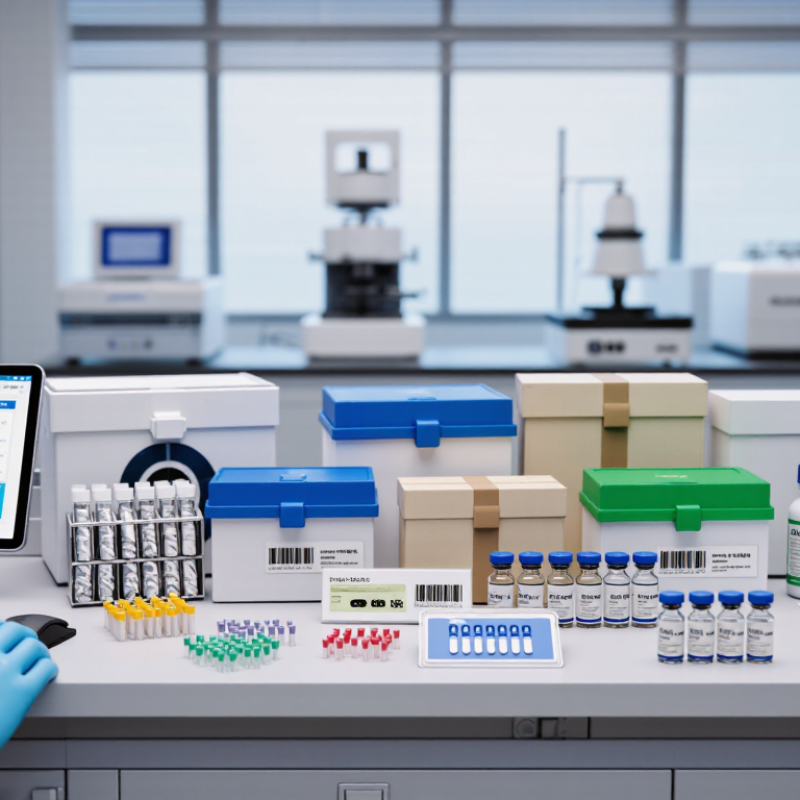
Choosing the right Reagent Kits is no longer a simple purchasing exercise. Global laboratories need dependable performance, clear documentation, and supply continuity. A kit may look affordable, yet hidden costs can appear through customs delays, cold-chain failures, or repeated testing. Small details matter. Lot consistency matters. So does technical support.
Dr. John P. A. Ioannidis, a professor of medicine and statistics, warned, “Most research findings are false.” His statement, published in PLOS Medicine, is not about commercial kits alone. However, it highlights a serious purchasing risk: attractive claims must be tested against evidence. Buyers should examine validation data, analytical sensitivity, specificity, shelf life, storage requirements, and compatibility with existing instruments. Certificates and instructions should be easy to verify. Vague performance promises deserve caution.
This guide reviews ten Reagent Kits for global buyers through a practical lens. It considers molecular testing, immunoassays, clinical chemistry, research workflows, and routine laboratory use. It also looks at distributor reliability, packaging, batch traceability, and after-sales assistance. A strong kit should perform consistently on a busy bench, not only in a polished product brochure.
There is no perfect choice.
Regional regulations, sample types, and laboratory capacity can change the ranking. Some buyers may value speed over flexibility. Others may prioritize low-temperature stability or automation. That uncertainty is real. The goal is not to promote one universal winner. It is to identify credible options, expose trade-offs, and help purchasing teams ask better questions before placing international orders.
10 Best Reagent Kits for Global Buyers?
Reagent kits are prepared sets of chemicals, controls, and instructions for laboratory testing. They help users measure targets in blood, food, water, or research samples. Typical components include reaction liquids, calibrators, collection tubes, and quality-control materials. Some kits support molecular testing, while others use immunoassay, chemistry, or microscopy methods.
Global buyers need these kits because consistent testing supports faster decisions across different laboratories. The World Health Organization has reported that laboratory results influence about 70% of healthcare decisions. MarketsandMarkets projected the in-vitro diagnostics market to grow from about 91.5 billion dollars in 2024 to 111.5 billion dollars by 2029. This growth increases demand for stable, traceable, and easy-to-validate products. Buyers should check sensitivity, specificity, shelf life, storage temperature, lot documentation, and language support. A low purchase price may hide cold-chain costs or difficult customs handling. Some kits fail in transit. That risk deserves more attention.
Tips: Ask for independent performance data, not only product claims. Confirm the sample type before ordering. Review the certificate of analysis and expiration policy. Test a small shipment first. Also, compare local regulatory and import requirements, since international rules can vary. The best kit is not always the most advanced one. It is the one that performs reliably in the buyer’s actual laboratory.
Choosing a reagent kit requires more than comparing prices.
Grand View Research’s 2024 in vitro diagnostics report places the global market above US$100 billion, so small quality differences can affect large purchasing programs. The WHO Laboratory Quality Management System handbook identifies 12 essential quality elements, including equipment, documents, purchasing, and assessment. Buyers should request lot-specific certificates, storage limits, expiration data, and traceability records. Clear instructions matter too. A perfect assay becomes unreliable beside a confusing protocol.
Accuracy needs evidence, not attractive claims. Check sensitivity, specificity, precision, interference testing, and the intended sample type. CLSI EP05 recommends a structured precision study across 20 days, with repeated measurements under defined conditions. Ask whether the supplier followed comparable testing. Do not accept “high accuracy” without confidence intervals or comparator methods. ISO 15189:2022 also emphasizes laboratory competence and controlled processes. That supports a practical audit checklist, not blind trust. Cost-per-test should include controls, calibrators, waste, shipping, and failed runs. A cheap kit may become expensive after temperature excursions or repeated testing. I would also challenge my own bias: familiar packaging can feel safer, but familiarity is not validation. Trial a small lot, review discordant results, and document every decision before scaling global orders.
A practical global shortlist should cover ten reagent kits across major laboratory applications. The first four are DNA extraction, RNA extraction, conventional PCR, and real-time PCR kits. They support infectious disease testing, genetic workflows, and routine research. The next three are reverse-transcription, NGS library-preparation, and nucleic-acid cleanup kits. Together, they address sample preparation, amplification, sequencing, and contamination control. The World Health Organization’s Essential Diagnostics List highlights reliable laboratory testing as a foundation for effective clinical decisions.
The remaining three are ELISA, cell-viability, and immunofluorescence assay kits. ELISA supports protein and antibody measurement. Cell-viability kits help evaluate culture conditions and treatment effects. Immunofluorescence kits add visual detail to tissue and cellular studies. Grand View Research valued the global molecular diagnostics market at roughly 31 billion dollars in 2023, showing strong demand for consistent molecular workflows. However, market growth does not guarantee equal kit performance.
Procurement teams should compare analytical sensitivity, extraction yield, shelf life, language support, and temperature requirements. A kit rated for ambient shipping may reduce risk in remote regions. Lot-to-lot data matters. So does technical support.
No kit is universally best. I would recheck every claimed detection limit against independent validation data. A lower purchase price can hide repeat testing, failed controls, and delayed reporting. Regional regulations, instrument compatibility, and local laboratory experience still determine the better choice.
10 Best Reagent Kits for Global Buyers?
How to Compare Compatibility, Performance, and Total Purchase Cost
A reliable reagent kit should fit your workflow, not just your budget. Check the sample type, required volume, instrument settings, and reaction temperature. A kit designed for purified samples may perform poorly with whole blood or environmental extracts. Confirm that its controls, calibrators, and detection range match your laboratory method. Small differences matter. Even tube size can affect automation.
Performance needs evidence beyond a strong product claim. Review sensitivity, specificity, precision, recovery, and lot-to-lot consistency. Ask for validation data from samples similar to yours. Stability information is equally important, especially when shipments cross several climate zones. Check storage temperatures, shelf life upon arrival, and acceptable transport conditions. A cold-chain delay can damage results before testing begins.
Total purchase cost includes more than the invoice. Add freight, temperature-controlled packaging, import handling, storage, labor, failed runs, and unused reagents. Compare cost per reportable result, not cost per box. Local technical support and clear documentation may prevent expensive troubleshooting. However, a longer warranty or larger package is not always better. It may create waste when testing volume changes. My own comparison would include a small pilot order before a full purchase. That approach takes time, and it can feel inefficient, but it exposes compatibility problems early. Assumptions still need review.
10 Best Reagent Kits for Global Buyers?
Global buyers should treat certification as a purchasing requirement, not a decorative document. Check the certificate’s scope, validity, issuing body, and covered product category. A quality system certificate does not automatically approve every reagent kit. Request a current certificate of analysis, safety data sheet, lot number, and expiry date. Traceability matters when results must be reviewed months later. Requirements also vary between research, educational, and clinical applications.
Shipping conditions can protect or ruin a reliable kit. Confirm whether the package needs ambient, refrigerated, or frozen transport. Ask for insulated packaging, temperature indicators, and a documented dispatch timeline. Customs paperwork should clearly describe the product, quantity, intended use, and storage range. Delays at a border are not rare. A small temperature excursion may be missed if nobody checks the logger immediately.
Storage instructions deserve equal attention after delivery. Record the arrival temperature, inspect seals, and place materials in a monitored area. Keep kits away from direct light and repeated warming cycles. Support should include technical documentation, complaint handling, replacement procedures, and a reachable contact person. Good support is specific. “Please check the manual” is not enough. Even careful buyers can overlook local import rules or internal validation needs, so review the process with a qualified laboratory professional before ordering.
| No. | Reagent Kit Type | Typical Application | Certification and Documentation to Request | Shipping Requirements | Storage Conditions | Typical Stability Considerations | Buyer Support Checklist |
|---|---|---|---|---|---|---|---|
| 1 | DNA Extraction Kit | Purification of genomic DNA from blood, tissue, saliva, swabs, or microbial samples. | ISO 13485 evidence SDS Certificate of Analysis Intended-use statement | Usually shipped at ambient temperature when validated by the manufacturer. Protect liquid components from freezing and excessive heat. | Commonly 15–30°C before opening; some components may require 2–8°C. Follow the product-specific label. | Binding columns, magnetic beads, enzymes, and buffers can have different expiry dates. Confirm lot-specific expiry and open-vial stability. | Request a protocol, sample compatibility list, expected yield range, inhibitor guidance, and troubleshooting support. |
| 2 | RNA Extraction Kit | Isolation of total RNA, viral RNA, or tissue RNA for research and molecular testing. | SDS Certificate of Analysis RNase-control information Quality-system documentation | Use temperature-controlled shipping if the kit contains enzymes or other cold-sensitive components. Avoid prolonged exposure to heat. | Frequently 2–8°C for enzyme-containing kits; some lysis and wash buffers may be stored at room temperature. Check the insert. | RNA work requires RNase-free handling. Confirm expiration, freeze-thaw limits, and whether carrier RNA is supplied separately. | Request guidance on low-input samples, transport media compatibility, DNase treatment, and RNA integrity expectations. |
| 3 | PCR Master Mix Kit | Routine amplification of DNA targets for research, screening, and assay development. | SDS Certificate of Analysis Performance data Lot traceability | Usually shipped frozen or with validated cold packs. Dry-ice shipment may be appropriate for certain enzyme formulations. | Commonly stored at −20°C. Minimize freeze-thaw cycles and keep the mix on a chilled rack during setup. | Performance may vary by template, primer design, and cycling conditions. Confirm shelf life after thawing and recommended mixing method. | Request a cycling protocol, inhibitor tolerance data, hot-start information, and technical assistance for nonspecific amplification. |
| 4 | Reverse Transcription Kit | Conversion of RNA into complementary DNA for RT-PCR, sequencing, or expression analysis. | SDS Certificate of Analysis RNase-free declaration Performance specifications | Typically transported frozen or under validated refrigerated conditions. Temperature monitoring is advisable for long international routes. | Commonly −20°C for enzymes and reaction mixes; avoid repeated freeze-thaw cycles. | Reaction performance depends on RNA quality, primers, and incubation time. Verify stability after reconstitution or first use. | Request recommendations for random primers, oligo(dT), difficult templates, genomic-DNA removal, and negative controls. |
| 5 | Real-Time PCR Detection Kit | Qualitative or quantitative detection of specific nucleic-acid targets using fluorescent PCR instruments. | Intended-use labeling SDS CoA Regulatory status by market | Cold-chain shipping is commonly required. Use validated packaging, temperature indicators where appropriate, and documented chain of custody. | Often stored at −20°C; some ready-to-use formats permit 2–8°C for a limited period. Follow the approved instructions. | Check target inclusivity, cross-reactivity data, internal-control performance, lot expiry, and post-thaw stability. | Request instrument compatibility, positive and negative control specifications, threshold-setting guidance, and result interpretation rules. |
| 6 | ELISA Antibody or Antigen Kit | Detection or measurement of proteins, antibodies, hormones, cytokines, and other analytes in biological samples. | SDS CoA Calibration information Validation summary | Often shipped at 2–8°C with insulated packaging. Do not allow temperature-sensitive plates or conjugates to freeze unless specified. | Usually 2–8°C, protected from light and moisture. Bring reagents to the stated working temperature before use. | Confirm standard-curve range, sensitivity, specificity, cross-reactivity, matrix effects, and stability of prepared reagents. | Request plate layout templates, washing requirements, reader settings, repeat criteria, and support for calculating results. |
| 7 | Lateral Flow Immunoassay Kit | Rapid qualitative or semi-quantitative detection of antigens, antibodies, or small molecules. | Intended-use statement SDS CoA Market-specific registration | Usually shipped at controlled ambient temperature or 2–30°C, depending on validation. Protect test strips from humidity and direct sunlight. | Commonly 2–30°C in the original sealed packaging. Do not use damaged, wet, or expired cassettes. | Humidity, sample volume, reading time, and storage temperature can affect results. Check unopened and opened-pouch stability. | Request sample-type validation, positive and negative control procedures, invalid-result criteria, and reader compatibility if applicable. |
| 8 | Cell Culture Media Supplement Kit | Cell growth, selection, differentiation, maintenance, or cryopreservation workflows. | SDS CoA Sterility information Animal-origin statement | Liquid supplements may require 2–8°C shipping; frozen sera, growth factors, or cytokines may require validated frozen transport. | Frequently 2–8°C for liquid supplements and −20°C or below for certain proteins. Protect light-sensitive components. | Confirm lot-to-lot testing, expiry after opening, aliquoting recommendations, and compatibility with the intended cell line. | Request sterility testing details, endotoxin limits, mycoplasma information, reconstitution instructions, and application protocols. |
| 9 | Protein Purification Kit | Isolation and cleanup of recombinant proteins, antibodies, or tagged proteins from laboratory samples. | SDS CoA Resin specification Chemical compatibility data | Many resin and buffer kits can ship at ambient temperature, while proteases or sensitive additives may require cold-chain handling. | Commonly 2–8°C for prepared resins or buffers; some dry components are stable at room temperature. Avoid freezing resins unless approved. | Capacity, flow rate, binding chemistry, and regeneration limits determine usable life. Confirm storage buffer and maximum reuse cycles. | Request binding-capacity data, column-equilibration instructions, compatible detergents, regeneration guidance, and scale-up support. |
| 10 | Microbiology Identification Kit | Presumptive identification, biochemical testing, or antimicrobial susceptibility screening of microorganisms. | SDS CoA QC strain information Regulatory status by use | Follow the validated route for culture media, cards, strips, and reagent panels. Some formats require refrigerated or frozen transport. | Often 2–8°C for prepared media and test strips; dry media may permit ambient storage. Protect from moisture and contamination. | Verify growth-promotion, sterility, control-organism requirements, incubation limits, and expiration after opening. | Request interpretation tables, acceptable control results, inoculum-density guidance, biosafety documentation, and local technical support. |