China Top L-Carnitine Powder Suppliers for Global Buyers
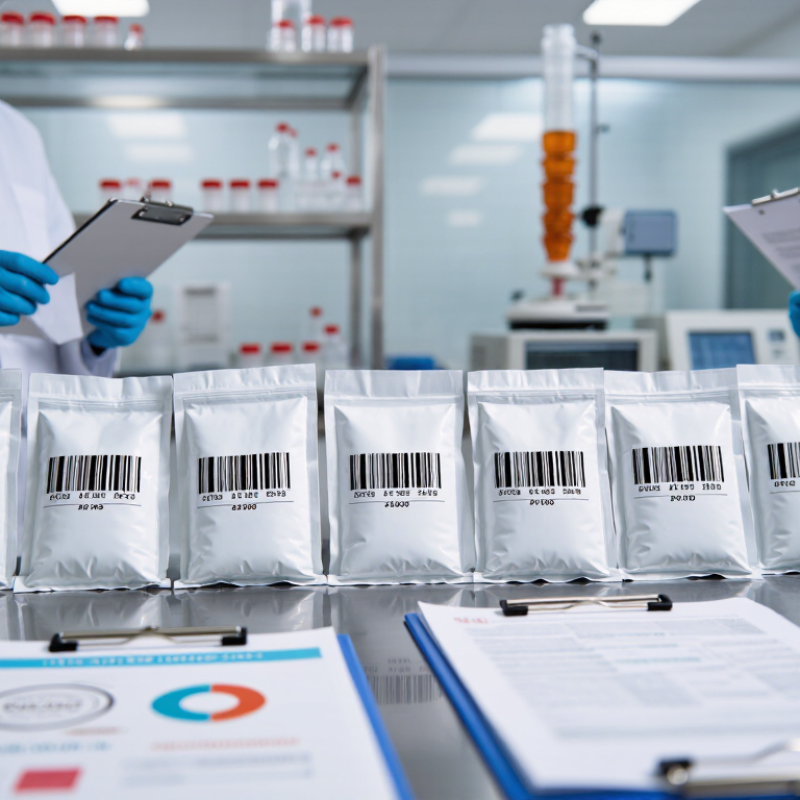
Choosing reliable L-Carnitine Powder suppliers in China requires more than comparing prices or reading polished company profiles. Global buyers need practical evidence, including consistent assay results, clear raw-material origins, stable particle quality, and complete batch documentation. A dependable supplier should provide a Certificate of Analysis, production specifications, contaminant testing, and traceable lot numbers. These details matter when the powder arrives in sealed bags, under controlled storage, with every label matching the shipment records.
Carnitine researcher Paul L. Rebouche has described carnitine as “essential for the transport of long-chain fatty acids into mitochondria.” This scientific role explains why manufacturers carefully evaluate identity, purity, and formulation compatibility. However, L-Carnitine Powder quality can vary between batches, even when two products appear visually identical. White powder is not proof of purity. A low price may also hide weaker testing or inconsistent supply.
This guide reviews China-based suppliers through an E-E-A-T-focused lens: practical manufacturing experience, technical knowledge, transparent evidence, and buyer confidence. It considers factory qualifications, quality systems, testing capacity, export experience, packaging options, and communication speed. Supplier claims should be checked, not simply repeated. That is an important limitation. Public information can be incomplete, and independent verification remains necessary. Buyers should request recent samples, compare laboratory reports, confirm production capacity, and examine how suppliers handle complaints. The strongest partnerships are built slowly, with documented checks at every stage.
What L-Carnitine Powder Is and Why Global Buyers Source It from China
China Top L-Carnitine Powder Suppliers for Global Buyers
L-carnitine powder is a naturally occurring compound involved in fatty-acid transport inside cells. It helps move certain fatty acids toward mitochondria, where energy production occurs. Its role sounds simple, but product quality is not simple. Commercial powder may serve dietary supplement, food, or animal nutrition applications, depending on local regulations and formulation needs. Buyers should never treat it as a guaranteed weight-loss solution.
China attracts global buyers through broad manufacturing capacity, established chemical supply chains, and export experience. Many qualified facilities can provide batch-specific certificates of analysis, traceability records, and controlled packaging. Practical sourcing often starts with a sample, followed by testing for identity, assay, moisture, microbiological limits, heavy metals, and residual solvents. Documentation matters.
The process is not flawless. A low quotation may reflect weaker testing or unclear specifications. Buyers should verify production addresses, quality systems, audit responses, and third-party laboratory results before placing large orders.
Ask how powder is protected from humidity during storage and shipping. Small details matter. Clear communication also reduces mistakes in particle size, purity, packaging, and labeling. Supplier selection should match the intended market, because import rules and permitted claims differ across countries.
How to Evaluate China-Based L-Carnitine Powder Suppliers
When evaluating China-based L-carnitine powder suppliers, begin with product identity and manufacturing evidence. Request the specification sheet, recent certificate of analysis, and batch number. Check assay, moisture, particle size, heavy metals, and microbiological limits. A clean-looking document is not enough. Ask whether an independent laboratory tested the same production batch.
Supplier experience matters in daily operations. Review factory qualifications, quality-management records, export history, and production capacity. Confirm whether the supplier manufactures the powder or trades it from another facility. A video tour can help, but an on-site audit provides stronger evidence. Inspect raw material storage, labeling, cleaning controls, and sampling procedures. Small details often reveal process discipline.
Request a representative sample before discussing large volumes. Compare its color, odor, solubility, and laboratory results with the specification. Ask about packaging, shelf life, storage temperature, and transport protection. Clear answers suggest technical competence. Vague answers deserve caution. Pricing should be assessed with testing, documentation, shipping, and possible reinspection included. The lowest quotation may become expensive later. I would also test more than one batch, because consistency is not guaranteed by a single successful sample. Communication quality can change during peak seasons, so record every agreement in writing. Mistakes still happen, even with experienced suppliers. A careful buyer leaves room for review.
Key Product Specifications, Grades, and Quality Standards
China Top L-Carnitine Powder Suppliers for Global Buyers
Reliable L-carnitine powder sourcing begins with clear product specifications. Common forms include L-carnitine base, L-carnitine tartrate, and other specialty grades. Each form differs in assay, stability, solubility, and application suitability. Food-grade material may suit fortified beverages or dietary supplements. Pharmaceutical-grade material requires stricter controls and stronger documentation. Confirm the intended market before requesting quotations.
A practical specification sheet should state assay percentage, moisture, particle size, appearance, odor, and solubility. High-quality powder usually appears white to slightly off-white, with consistent flow and minimal foreign particles. Ask for limits on heavy metals, microbial counts, residual solvents, and prohibited contaminants. A batch-specific certificate of analysis is essential. Better still, verify key results through independent laboratory testing. Small details matter.
Quality systems should include GMP-based production, HACCP controls, traceability, calibrated instruments, and retained samples. ISO certification can support process confidence, but it does not replace product testing. Review the manufacturing date, lot number, packaging weight, storage conditions, and shelf-life evidence. A clean certificate alone proves little. Specifications may look precise while sampling remains weak. Suppliers should explain testing methods, not only provide numbers. Buyers should also check whether the listed grade matches local regulations and the final product category. Mistakes happen, especially when technical terms are copied between documents. Clear communication prevents costly assumptions.
Comparing Manufacturing Capacity, Pricing, and Export Services
China Top L-Carnitine Powder Suppliers for Global Buyers
Comparing Manufacturing Capacity, Pricing, and Export Services
Manufacturing capacity should mean more than a large factory photo. Ask about monthly output, available production lines, and recent batch records. A reliable supplier can explain how raw materials move from receiving to blending, testing, and sealed packing. For example, a 500-kilogram batch may require separate checks for identity, purity, moisture, and microbiological quality. Request current certificates of analysis, but verify whether they match your specification. Capacity figures can look impressive. Actual delivery performance matters more.
Pricing depends on purity, order volume, packaging, testing, and shipping terms. A low quotation may exclude export documentation, inner bags, palletizing, or destination charges. Compare prices using the same grade and Incoterm. Ask for a tiered quote at 100, 500, and 1,000 kilograms. This reveals whether volume savings are realistic. Some suppliers offer flexible minimum order quantities, while others require full production lots. Cheap is not always efficient.
Export service can reduce costly delays. Experienced teams should provide commercial invoices, packing lists, batch documents, and transport coordination. Confirm whether packaging supports humidity protection during sea freight. A practical supplier should also discuss lead times, customs requirements, and replacement procedures for damaged cartons. One detail is easy to miss: labels may need different language, net-weight, or lot-code formats. I would not rely on email promises alone. Sample approval, factory communication, and document review still require careful human judgment.
How to Verify Suppliers and Complete an International Purchase
For global buyers, verifying China-based L-carnitine powder suppliers begins with traceable evidence, not attractive quotations. Ask for legal company details, manufacturing address, product specification, and recent batch records. A serious supplier should provide a Certificate of Analysis showing assay, identity, moisture, heavy metals, and microbiological results. Request the testing method and laboratory name. Do not accept unexplained screenshots. A polished PDF is not proof.
Order a representative sample before discussing a large shipment. Compare its powder color, odor, solubility, and label details with the specification. Independent laboratory testing can confirm identity and purity, especially when the material enters food or supplement production. Check whether the facility follows suitable quality systems, such as documented GMP procedures, controlled batch release, and complaint handling. An audit may reveal gaps that certificates hide. That can be uncomfortable, but it matters.
For the international purchase, confirm the exact grade, packaging weight, shelf life, storage temperature, lead time, and Incoterms in the sales contract. Clarify who prepares the commercial invoice, packing list, certificate of origin, and transport documents. Your customs broker should verify the HS classification and destination requirements before payment. Use staged payment when practical, and arrange pre-shipment inspection for high-value orders. Keep every revision in writing. I would not rely on urgency; it often weakens judgment. Even careful buyers miss small details, such as pallet dimensions or humidity protection, so review the final packing plan line by line.
How buyers can use this chart: L-Carnitine has the molecular formula C7H15NO3 and a relative molecular mass of approximately 161.20 g/mol. Buyers can compare these identity details with the supplier’s specification sheet, certificate of analysis, and independent laboratory test results before completing an international purchase. The values are calculated from standard atomic weights and are not company-specific data.