Top 10 Best Genomic DNA Cleanup Methods for Optimal Results?
In the field of genomics, effective genomic DNA cleanup is crucial for accurate results. Dr. Emily Chen, a leading expert in molecular biology, highlights, "Clean genomic DNA is the foundation for reliable genomic studies." This underscores the necessity of proper techniques for DNA purification.
Many researchers face challenges when isolating DNA. Contaminants can lead to misleading data. Variations in techniques can yield different purification outcomes. Each method has its advantages and setbacks. Certain methods may remove all impurities but can also lose some target DNA.
It's essential to choose an appropriate cleanup strategy. Understanding each technique's strengths will significantly improve results. For optimal genomic DNA cleanup, knowledge and careful selection are key. Following best practices will help researchers achieve their goals more effectively.
Overview of Genomic DNA Cleanup Methods
Genomic DNA cleanup is crucial for accurate downstream applications. The quality of DNA significantly impacts sequencing results and data interpretation. Methods vary widely, addressing specific needs in purification and concentration. A study showed that up to 40% of sequencing errors stem from poor-quality DNA. Selecting an effective cleanup method can greatly improve results.
One common approach is alcohol precipitation. This method is simple and cost-effective. However, it can lead to residual contaminants. Research indicates that residual salts can inhibit enzymes and affect assays. Another popular technique is column-based purification. It provides high yield and purity levels. Yet, it's essential to ensure proper elution conditions. Failure to do so may result in significant DNA loss.
Magnetic bead-based cleanup has gained popularity recently. This method offers rapid processing and minimal manual handling. However, it requires careful optimization for different sample types. Missteps here can compromise your results. These nuances highlight the importance of method selection. It's vital to evaluate your project's specific needs before committing to a cleanup strategy.
Criteria for Selecting DNA Cleanup Techniques
When selecting a DNA cleanup method, several criteria are essential for achieving optimal results.
Purity and yield are the primary considerations.
Studies show that high-quality genomic DNA should have an A260/A280 ratio between 1.7 and 2.0. If the ratio falls below this range, it indicates contamination. This can impact downstream applications, such as sequencing.
Speed is another critical factor. Methods that require minimal steps and less time are often preferred in time-sensitive projects.
For instance, a procedure that can be completed in under an hour is generally favored. However, rapid methods may compromise purity. Researchers must weigh the benefits of speed against the need for quality.
Cost-effectiveness also plays a significant role.
Budget constraints can limit the choice of methods. It is essential to balance performance with affordability.
Some techniques may offer lower upfront costs but result in higher reagent expenses over time.
Implementing a thorough cost-benefit analysis helps to identify the most suitable method.
Despite advancements and many options, no one-size-fits-all solution exists. Each project has unique demands, which warrants careful consideration of all criteria before making a choice.
Top 10 Genomic DNA Cleanup Methods Reviewed
When it comes to genomic DNA cleanup methods, precision is key. Recent studies show that up to 30% of sequencing errors arise from poorly cleaned DNA samples. Efficient cleanup techniques are crucial for high-quality genomic studies. Methods vary widely, but certain approaches yield better purification results without introducing contaminants.
One effective method utilizes silica-based columns. These columns enable the binding of DNA while washing away salts and contaminants. Research indicates this method can achieve a purity level of 1.8–2.0 on the A260/A280 ratio, ideal for downstream applications. However, some users report variable results due to operator technique, underscoring the need for training.
Another popular technique is magnetic bead-based cleanup. This method is known for its convenience and ability to handle low-input samples. A report highlighted that bead-based cleanup can recover 80-90% of DNA while removing most impurities. Despite these advantages, some researchers have noted that bead sizes and concentrations can affect yield, necessitating careful optimization.
Ongoing assessments of these methods reveal a landscape where improvements in precision and efficiency remain vital.
Comparison of Efficiency and Yield in Cleanup Techniques
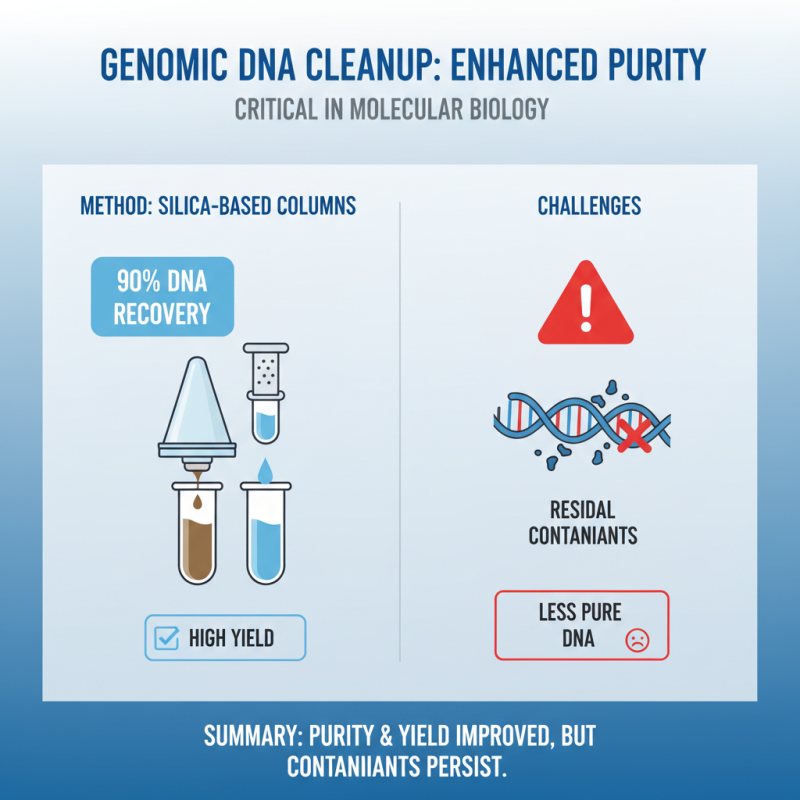
Genomic DNA cleanup is a critical process in molecular biology. It enhances the purity and yield of DNA extracted from various samples. Key methods differ significantly in efficiency. In a recent analysis, silica-based columns showed a 90% recovery rate in pure DNA. However, this method sometimes fails to eliminate all contaminants.
Another promising technique is magnetic bead-based cleanup. It has gained popularity for its convenience and efficiency. Studies indicate that magnetic beads can achieve over 85% yield with a minimal loss of DNA. Yet, issues with bead adherence and incomplete washing can lead to variability. It's essential to assess your lab's specific needs and sample types when choosing a method.
Phenol-chloroform extraction, a classic approach, remains effective. Its efficiency can reach 95% but poses safety concerns due to toxic reagents. Alternatives like enzymatic cleanup provide safer options, yielding around 80%. However, they can be less consistent. Each technique has strengths and weaknesses. Researchers may find trade-offs between efficiency, safety, and ease of use.
Best Practices for Genomic DNA Cleanup Optimization
Effective genomic DNA cleanup is vital for accurate results in any genetic analysis. Optimizing your DNA cleanup strategy can significantly enhance the quality of your samples. For best practices, consider the type of sample you're working with. Different sources, such as blood, tissue, or bacterial cultures, may require specific approaches.
Repeatedly centrifuging your samples can help to reduce contamination. Make sure to use clean tubes to avoid introducing impurities. When using enzymatic cleanup, monitor the time and temperature closely. Overdoing it can lead to DNA degradation. Smaller volumes often yield better concentration; however, this needs careful handling to avoid losses.
Tips: One way to check the quality of your pristine DNA is through spectrophotometry. Look for an A260/A280 ratio between 1.8 and 2.0. Anything lower may indicate contamination. Don't forget to run a gel electrophoresis. It provides visual confirmation of DNA integrity. Reflection on your methods is key. If results are unexpected, reassess each step in your cleanup process. Adjust protocols to suit your specific circumstances, and don’t shy away from trying new techniques.