What is IVD Diagnostics Products and How Do They Work?
In the rapidly evolving field of healthcare, IVD Diagnostics Products play a crucial role. Dr. Emily Chen, a renowned expert in diagnostic medicine, emphasizes, "The precision of IVD diagnostics is foundational for effective patient care." These products, which include tests performed on samples like blood or tissue, help in diagnosing diseases accurately.
IVD Diagnostics Products work by detecting biomarkers in samples. This process can quickly provide essential information about a person's health. However, there are challenges. Not all tests deliver accurate results. The quality of IVD diagnostics varies based on technology and execution. Continuous improvement is needed to enhance reliability.
The growth of this industry reflects its importance. As technology advances, new methods are introduced. Yet, with innovation comes the responsibility for safety and efficacy. The ultimate goal remains simple: to save lives and improve health outcomes. Given these dynamics, ongoing dialogue in the medical community is vital.

What Are In Vitro Diagnostics (IVD) Products?
In Vitro Diagnostics (IVD) products play a crucial role in healthcare. They are medical devices allowing testing of samples like blood or urine. IVD tests can diagnose diseases, monitor health status, and analyze biological markers. According to a recent industry report, the global IVD market is projected to reach nearly $100 billion by 2025, reflecting significant growth due to rising health awareness and technological advancements.
The effectiveness of IVD products depends on their accuracy and reliability. These tests must adhere to strict regulatory standards to ensure safety. For instance, the accuracy of blood glucose meters can vary widely. A study showed that nearly 30% of these devices did not meet performance standards. This raises concerns about their impact on patient care.
Tip: Always consult healthcare professionals for guidance on IVD test results. Understanding the limitations of these tests is essential. They can often provide context that raw data cannot. In addition, regular training and updates on IVD devices can enhance their effective use. Staying informed about new technology and recommendations can improve diagnostic decisions.
The Different Types of IVD Diagnostics Products Available
In vitro diagnostics (IVD) encompass a range of products designed to detect diseases and conditions. The IVD market has experienced rapid growth, driven by the demand for accurate diagnostic tools. According to a report by Market Research Future, the global IVD market is projected to reach $87 billion by 2025. This growth emphasizes the importance of recognizing the various types of IVD diagnostics products available.
One major category of IVD products includes reagents, which are critical for conducting tests. These reagents can vary widely, from chemical substances to biological materials. Additionally, instruments such as analyzers play a key role in facilitating automated testing and result interpretation. Point-of-care testing devices, which offer immediate results, are also gaining traction. Their convenience allows for quicker decision-making in clinical settings. It's essential to choose the right product for specific diagnostic needs.
**Tip:** Ensure that the chosen diagnostic tool meets regulatory standards. This guarantees reliability and accuracy.
Another category includes software solutions that manage data from tests. These programs analyze results using algorithms, helping healthcare providers make informed decisions. The integration of advanced technology, including AI, enhances diagnostics. However, some challenges remain. Many healthcare professionals may struggle with adopting these new technologies. Ongoing training and support could address this gap effectively.
**Tip:** Stay informed about the latest IVD innovations. Continuous education can improve your diagnostic understanding.
How IVD Diagnostics Products Function in Medical Testing
In vitro diagnostics (IVD) products are vital tools in medical testing. They help detect diseases by analyzing samples outside the human body. These tests provide critical information, enabling healthcare professionals to make informed decisions regarding patient care. IVD products can include blood tests, urine tests, and tissue samples. Each test is designed to identify specific markers related to different medical conditions.
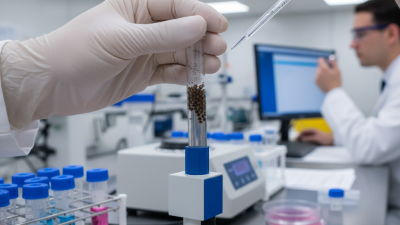
The functioning of IVD diagnostics is direct yet intricate. A sample is collected and processed. For example, blood might be drawn and sent to a lab for analysis. Technicians and automated systems then work to identify any abnormalities. This analysis often involves using reagents and sophisticated instruments. The results can be available within hours or days, depending on the type of test. In many cases, these tests are life-saving, allowing prompt diagnosis and treatment.
**Tip**: Always ensure proper sample collection techniques. Incorrect methods can lead to false results.
Precision is crucial, but errors can happen. A test might return inconclusive results. In such cases, repeating the test could be necessary for accuracy. This scenario demonstrates the need for continual learning and adaptation in medical practices.
**Tip**: Stay informed about new IVD technologies. Knowledge plays a vital role in improving diagnosis efficiency.
IVD diagnostics are not error-proof. Miscommunication during the testing process can compromise the outcome. It’s essential for healthcare teams to collaborate closely. This teamwork can enhance the reliability of testing results.
What is IVD Diagnostics Products and How Do They Work? - How IVD Diagnostics Products Function in Medical Testing
| Product Type |
Purpose |
Sample Type |
Detection Method |
Time to Result |
| Immunoassays |
Detects antibodies or antigens |
Blood, urine, saliva |
Enzyme-linked immunosorbent assay (ELISA) |
1-4 hours |
| Molecular Diagnostics |
Identifies genetic mutations |
Blood, tissue samples |
Polymerase Chain Reaction (PCR) |
1-3 hours |
| Point-of-Care Testing |
Immediate diagnosis at the site of care |
Whole blood, plasma |
Lateral flow assay |
15-30 minutes |
| Microbiological Testing |
Identifies infectious agents |
Blood, sputum, urine |
Culture methods, automated systems |
24-48 hours |
| Clinical Chemistry Tests |
Measures biochemicals in body fluids |
Blood, urine |
Spectrophotometry |
1-2 hours |
The Role of IVD in Disease Prevention and Management
In vitro diagnostics (IVD) play a crucial role in disease prevention and management. These products enable healthcare providers to detect diseases early. Early detection can lead to better treatment outcomes. For instance, diagnosing diabetes early allows patients to make lifestyle changes. This can significantly reduce complications.
IVD tests analyze samples like blood or urine. These tests provide valuable information about a person's health. However, the accuracy of these tests can sometimes be a concern. False positives or negatives occur occasionally. This underlines the importance of follow-up testing and consultations.
Additionally, IVD products support monitoring chronic conditions. They help track disease progression or treatment effectiveness. Regular testing can empower patients to manage their health proactively. Nonetheless, the reliance on tests can be misleading. Patients may assume that tests alone guarantee health management. Continuous education and communication with healthcare professionals are necessary.
Future Trends and Innovations in IVD Diagnostics Products
The field of In Vitro Diagnostics (IVD) is evolving rapidly. Technology is shaping the future of diagnostic products. Innovations such as point-of-care testing and digital health tools are becoming mainstream. These advancements aim to improve accuracy, speed, and accessibility. Machine learning helps analyze vast amounts of health data, enhancing real-time decision-making.
It’s crucial for stakeholders to stay updated on trends. Emerging technologies, like biosensors, offer a glimpse into the future. They promise non-invasive testing with quick results. However, integrating these innovations poses challenges. Regulatory processes must adapt to new technologies to ensure safety and efficacy.
Tips for practitioners include investing in training. Familiarize your team with new tools. This not only boosts confidence but also enhances patient care. Collaboration with technology experts can provide valuable insights. Then, you can navigate the changing diagnostic landscape more effectively. Remember, adopting new innovations is not without its growing pains, but the rewards can be significant.