How to Use DNA Magnetic Beads for Efficient Nucleic Acid Purification?
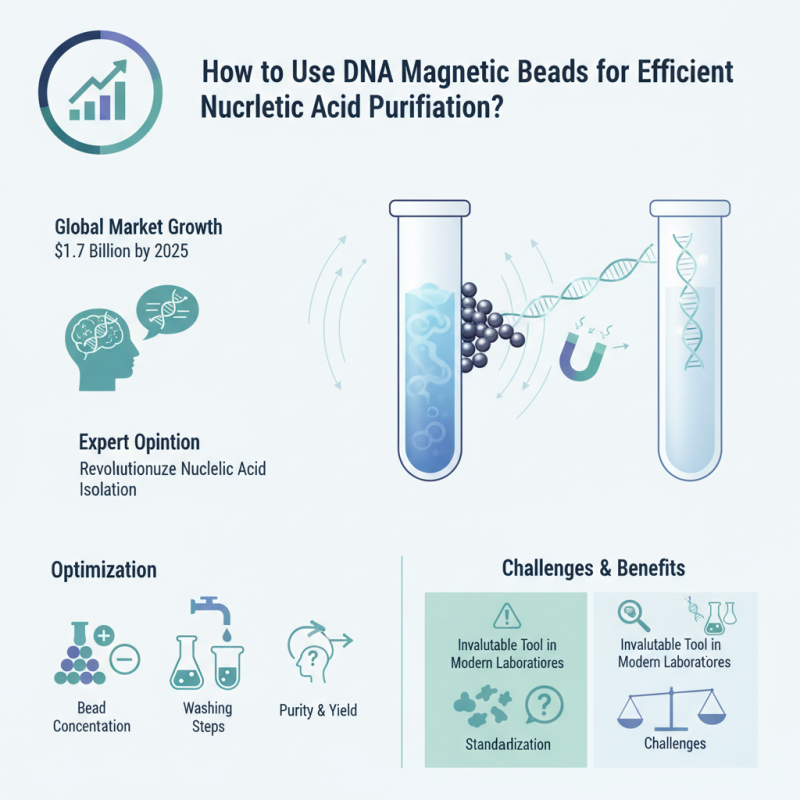
In recent years, the use of DNA Magnetic Beads has gained significant traction in the field of nucleic acid purification. According to a report by Grand View Research, the global market for magnetic beads is projected to reach $1.7 billion by 2025, driven by their efficiency and versatility. These beads simplify the purification process and enhance the yield of nucleic acids from various biological samples.
Dr. Emily Carter, a leading expert in molecular biology, emphasizes the importance of this technology. She states, “DNA Magnetic Beads revolutionize how we isolate nucleic acids.” However, the effective utilization of these beads requires meticulous optimization of protocols. Variables such as bead concentration and washing steps can impact the purity and yield of the extracted nucleic acids.
Despite the advantages, challenges persist in using DNA Magnetic Beads. Users must adapt to different sample types, which can complicate standardization. Ensuring consistent performance across diverse applications remains a struggle. Nonetheless, the benefits outweigh these challenges, making DNA Magnetic Beads an invaluable tool in modern laboratories.
Overview of DNA Magnetic Beads and Their Applications
DNA magnetic beads have gained traction in molecular biology for nucleic acid purification. These beads leverage magnetic properties to simplify separation processes. According to a recent report by MarketsandMarkets, the global market for magnetic beads is expected to reach USD 1.5 billion by 2025. This surge is attributed to their efficiency and versatility in labs.
Applications of DNA magnetic beads span various fields, including genomics, diagnostics, and forensics. Many research teams have adopted these beads for extracting DNA from complex samples. This method improves yield and purity, crucial for accurate downstream applications. However, some studies noted that the magnetic beads may suffer from non-specific binding, leading to contamination. This highlights the need for optimization in protocols and bead selection.
In the context of efficiency, researchers reported a 30% increase in purification speed using magnetic beads compared to traditional methods. They cluster nicely, allowing quick separation. Yet, users have reported issues with bead recovery, which can be frustrating. It's clear that while DNA magnetic beads offer significant advantages, researchers must remain vigilant to avoid potential pitfalls in their protocols.
Principles of Nucleic Acid Binding to Magnetic Beads
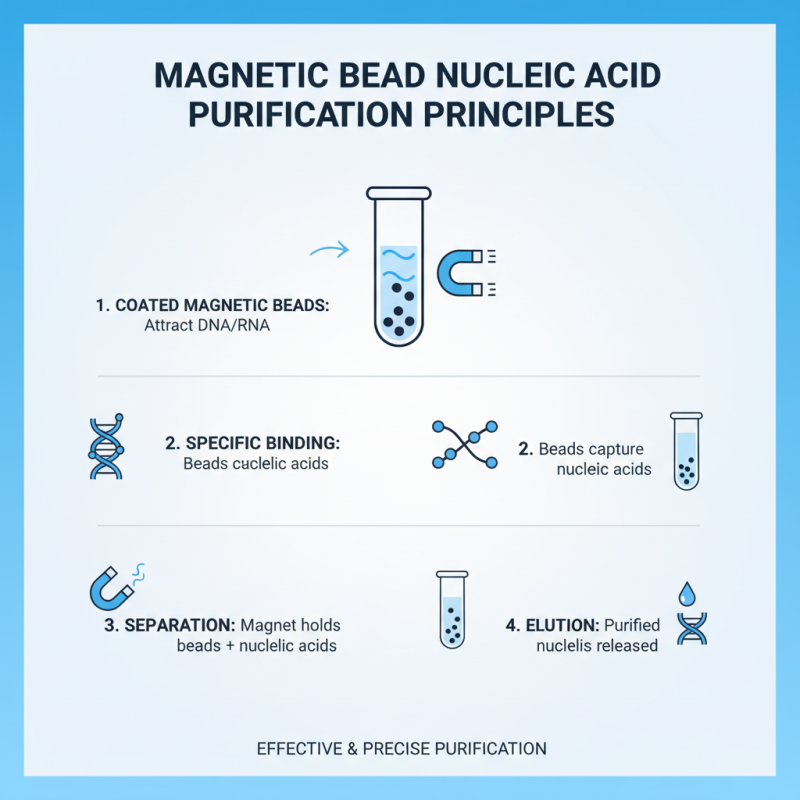
The principles of nucleic acid binding to magnetic beads are essential for effective purification. Magnetic beads are coated with materials that attract nucleic acids. This binding happens due to specific interactions. The nucleic acid can be DNA or RNA. When mixed with a sample, the beads capture these molecules. The process is straightforward but requires precision.
Magnetism plays a crucial role in this method. Once the nucleic acids adhere to the beads, applying a magnetic field facilitates separation. This step is critical. However, achieving complete binding can be tricky. Sometimes, not all target molecules attach to the beads. Various factors affect this binding. For instance, the salt concentration and temperature can vary. Understanding these variables is necessary for efficiency.
Moreover, the quality of magnetic beads influences the outcome. Low-quality beads might not capture nucleic acids effectively. It’s crucial to ensure consistent performance. Remember, purification is not just a technical challenge; it requires careful consideration. Conducting tests periodically can identify areas needing improvement. Each step, from binding to final elution, impacts the overall yield. Reflecting on these aspects can enhance your purification strategy.
Step-by-Step Protocol for DNA Purification Using Magnetic Beads
DNA purification using magnetic beads is a practical and efficient method. The process begins with preparing the samples. Ensure the samples are free from contaminants. Each step must be executed carefully to maintain the integrity of the DNA.
Next, add magnetic beads to the solution. These beads will bind to the nucleic acids. Mix the solution well to allow adequate binding. After that, use a magnetic separator to attract the beads. It’s crucial to check if all beads are collected. If not, it might affect the yield of DNA.
Washing the beads is another key step. Use appropriate buffers to remove impurities. Be thorough but gentle to avoid losing your target DNA. This part often requires patience. Finally, elute the DNA from the beads. The final product should be checked for quality and concentration. Reflecting on the process can help improve future extractions. It's not always perfect, but each attempt teaches something valuable.
Post-Purification Analysis of Nucleic Acids Obtained
Post-purification analysis of nucleic acids is a critical step in many research applications. After using DNA magnetic beads for purification, it’s essential to evaluate the integrity and concentration of the obtained nucleic acids. Techniques like spectrophotometry can provide basic concentration measurements. However, results may sometimes be inaccurate due to contaminants. It’s important to run controls with known quantities to ensure reliability.
Another crucial method is gel electrophoresis. It allows researchers to visualize nucleic acids and assess their size. This step can reveal degradation or loss of fragments during purification. While gel electrophoresis is informative, interpretation can vary. Bands might appear smeared, indicating issues in the purification process. Not all bands represent intact nucleic acids, and this ambiguity can lead to misinterpretations.
Quantitative PCR is also valuable but not without flaws. It measures the amplifiable DNA but can be affected by impurities. False positives or negatives are possible, especially if the sample is not clean. Researchers should regularly calibrate their instruments and use appropriate controls for validation. A critical eye is necessary throughout the analysis, as even minor oversights can lead to significant impacts.
How to Use DNA Magnetic Beads for Efficient Nucleic Acid Purification? - Post-Purification Analysis of Nucleic Acids Obtained
| Sample Type |
Purity (A260/A280) |
Yield (µg) |
Post-Purification Method |
Applications |
| Plasmid DNA |
1.85 |
250 |
Column Purification |
Cloning, Transfection |
| Genomic DNA |
1.90 |
300 |
Phenol-Chloroform Extraction |
Sequencing, PCR |
| RNA |
2.00 |
150 |
Buffer-based Method |
RT-qPCR, cDNA Synthesis |
| Total RNA |
2.05 |
200 |
Silica Column Method |
Microarray, Transcriptome Analysis |
| Metagenomic DNA |
1.75 |
180 |
Magnetic Bead Isolation |
Next-generation Sequencing |
Troubleshooting Common Issues in DNA Magnetic Bead Purification
When using DNA magnetic beads for nucleic acid purification, common issues can arise. One frequent problem is low yield. This may occur due to insufficient binding time. It’s crucial to allow the sample to mix well with the beads. Aim for at least five minutes of incubation. If yields still lag, try increasing the bead concentration.
Another issue is poor DNA quality. This can stem from improper washing steps. Ensure you wash the beads thoroughly. Residual ethanol can inhibit downstream applications. Additionally, check the magnetic separation process. If beads are not adequately separated, contamination might occur. This can compromise your results.
Sometimes, users encounter clumping of beads. This can lead to inefficient separation. Agitate the beads gently during the process. Using a pipette can help disperse the beads evenly. Lastly, it’s recommended to evaluate your protocols regularly. Each experiment can be unique, and adjustments may be necessary. Reflect on your methods for continuous improvement.