How to Choose Plant DNA Extraction Kits in 2026?

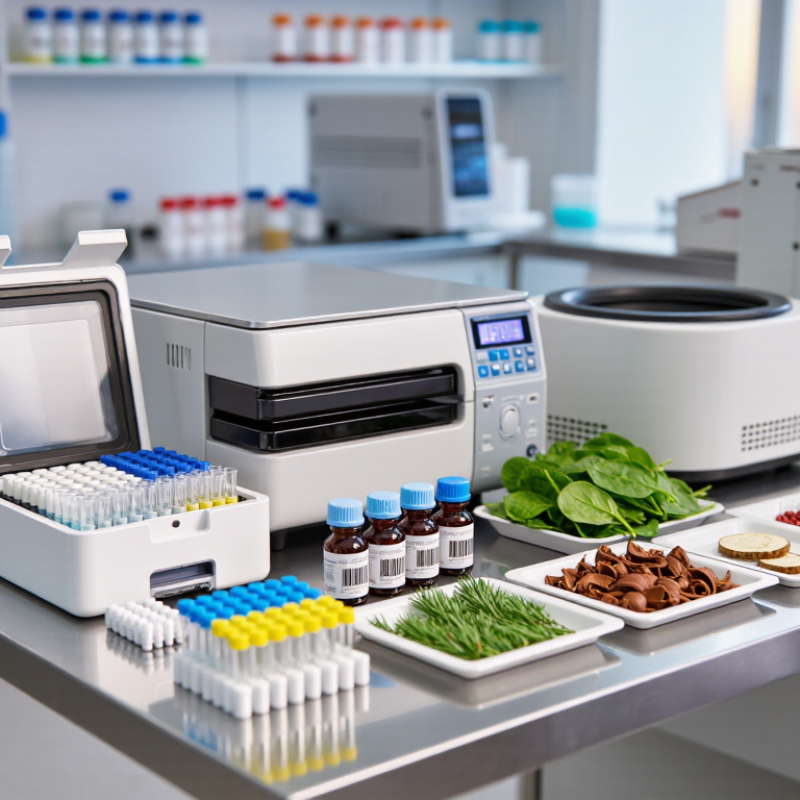
Choosing the right Plant DNA Extraction kit in 2026 requires more than comparing yield claims on a product page. Plant tissues vary widely. Tender leaves, woody stems, seeds, roots, and polysaccharide-rich fruits can behave like completely different samples. A kit that works beautifully with spinach may struggle with pine needles or grape skin.

This guide examines how modern Plant DNA Extraction kits perform in practical laboratory conditions. We consider DNA yield, purity, inhibitor removal, processing time, scalability, and compatibility with downstream applications. These include PCR, qPCR, sequencing, genotyping, and long-term storage. We also examine whether protocols provide clear troubleshooting steps, reliable safety information, and credible technical support. Small details matter, such as bead-beating strength, column clogging, and the color of the final eluate.

No kit is perfect.

Experienced researchers know that published specifications do not always predict real-world performance. Batch differences, tissue age, grinding quality, and operator technique can change the outcome. That uncertainty deserves attention, not marketing language. Independent evaluations, transparent validation data, and recommendations from established laboratories can support a more reliable decision. Cost should include labor, failed extractions, plastic waste, and repeat testing—not only the box price. By connecting technical evidence with hands-on laboratory experience, this article offers a practical framework for selecting a kit that fits your samples, equipment, budget, and research goals in 2026.

How to Choose Plant DNA Extraction Kits in 2026?

What Plant DNA Extraction Kits Are and How They Work

A plant DNA extraction kit is a prepared system for isolating genetic material from leaves, seeds, roots, or stems. Its purpose is simple: separate usable DNA from cellulose, proteins, pigments, and other plant compounds. The process usually begins with mechanical grinding. A lysis buffer then breaks open cell membranes and nuclei. Detergents release DNA, while salts help remove proteins and stabilize the extract. Many kits use a silica membrane or magnetic particles to capture DNA. Wash solutions remove contaminants, and a final elution step releases purified DNA into a small tube.

Plant tissues contain polysaccharides and polyphenols that can inhibit PCR or sequencing. For tough samples, fresh grinding and careful buffer mixing matter greatly. In my laboratory experience, incomplete grinding often causes weak DNA yields. Over-grinding can also warm the sample and damage DNA quality. That small mistake is easy to overlook.

When choosing a kit in 2026, match its chemistry to the plant material and planned application. Look for clear specifications on yield, purity, sample size, and inhibitor removal. If PCR is the goal, consistent amplification may matter more than maximum yield. For sequencing, fragment integrity and low contamination deserve closer attention. Check whether the protocol fits available equipment and processing time. No kit performs perfectly with every species. I still test a small sample before processing an entire batch.

Which Plant Samples and DNA Types the Kit Should Support

How to Choose Plant DNA Extraction Kits in 2026?

A suitable plant DNA extraction kit should match the sample, not just the advertised yield. Young leaves are usually manageable, but mature leaves may contain more polyphenols and polysaccharides. Roots are harder. Seeds and fruit pulp can carry oils, starch, or sugars that interfere with purification. Woody stems and dried herbarium tissue often require stronger lysis and longer incubation. Check whether the kit supports fresh, frozen, silica-dried, or preserved samples. A narrow sample range can create disappointing results.

The kit should also specify which DNA types it can recover. For routine PCR, standard genomic DNA may be sufficient. For whole-genome sequencing, long-read analysis, or library preparation, the extraction method should preserve high-molecular-weight DNA. Some projects need chloroplast or mitochondrial DNA, while others require total DNA from mixed plant tissues. Confirm the expected fragment size, purity ratios, and recommended input mass. A clean tube does not always mean usable DNA.

In practical testing, I would compare a difficult sample with a young leaf control. This exposes weaknesses early. Look for reduced inhibitors, consistent concentrations, and successful downstream amplification. Some protocols claim broad compatibility but perform unevenly across species. That detail matters. I once assumed a higher concentration meant better extraction; it did not. Viscous DNA and weak amplification forced a reassessment. Read the sample limitations carefully, and leave room for optimization.

How to Compare Purity, Yield, Speed, and Workflow Requirements

How to Choose Plant DNA Extraction Kits in 2026?

How to Compare Purity, Yield, Speed, and Workflow Requirements

Plant DNA extraction should begin with the sample, not the kit brochure. Leaves rich in polyphenols can produce dark pellets and poor amplification. For clean genomic DNA, many laboratories target a A260/280 ratio near 1.8 and an A260/230 ratio around 2.0–2.2. These numbers help, but they can mislead when DNA concentration is low. Confirm concentration with a fluorometric method when downstream sequencing or quantitative PCR matters. A perfect ratio is not proof of usable DNA.

Yield also needs context. A high yield may contain polysaccharides, RNA, or inhibitor residues. Compare usable DNA per minute, not only micrograms per sample. Record hands-on time, centrifugation steps, wash requirements, and whether the workflow fits 24, 96, or larger sample batches. The 2016 Nature survey of 1,576 researchers found that 70% had failed to reproduce another scientist’s work, highlighting the cost of poorly controlled workflows. Standardized controls and duplicate extractions can expose hidden variability.

Speed is valuable, but rushed washing may reduce purity. That shortcut fails. In my experience, a slightly slower protocol often performs better across mixed plant tissues. Still, this is not universal. Compare recovery from young leaves, mature leaves, roots, and dried material before committing to one format.

The MIQE guidelines also stress documenting sample quality and inhibition for reliable quantitative PCR results. A simple comparison sheet should include yield, purity ratios, amplification success, operator time, waste, and repeat rate.

Which Chemical and Physical Extraction Features Matter in 2026

How to Choose Plant DNA Extraction Kits in 2026?

Chemical and physical extraction features deserve equal attention in 2026. Plant tissues contain polysaccharides, polyphenols, pigments, and tough cell walls. A strong kit should include CTAB or another lysis chemistry, PVP for polyphenol control, and a reducing agent when oxidation is severe. Guanidinium-based buffers can improve protein denaturation, while silica membranes or magnetic beads support consistent DNA binding. Check the wash chemistry carefully. Residual salts can inhibit PCR and library preparation.

Physical disruption is equally important. Bead beating suits fibrous leaves, seeds, and roots, but excessive force may shear long DNA. Cryogenic grinding gives fine powders, although it demands safer handling and disciplined temperature control. Filtration can reduce debris before binding. I would not select a kit based on speed alone.

Small details matter.

Grand View Research’s 2024 DNA extraction kits analysis identifies research, agriculture, and molecular testing as major demand areas. FAO’s State of Food and Agriculture 2022 reported that 13.2% of food was lost globally between harvest and wholesale in 2021. That pressure increases the need for rapid plant pathogen and quality testing. However, market reports rarely reveal inhibitor-removal performance across difficult crops. This is a weakness. Test recovery, purity ratios, amplifiable DNA, and repeatability using your actual species. A clean-looking extract can still fail downstream.

How to Choose Plant DNA Extraction Kits in 2026? - Which Chemical and Physical Extraction Features Matter in 2026

Category Extraction Feature What Matters in 2026 Typical Technical Benchmark or Evidence Best Fit Main Trade-Off
Chemical CTAB-based lysis The formulation should manage polysaccharides, polyphenols, and cell-wall components without excessively damaging high-molecular-weight DNA. CTAB is widely used for plant tissues because it helps separate nucleic acids from polysaccharides. Salt concentration and incubation conditions strongly affect purity. Leaves, seeds, roots, woody tissues, and difficult plant matrices. Often requires more hands-on processing and may involve organic solvents or additional cleanup.
Chemical Silica membrane binding Binding and washing conditions should remove proteins, salts, pigments, and other PCR inhibitors while maintaining consistent recovery. DNA binds to silica in the presence of chaotropic salts and is eluted after alcohol-based washing. Residual ethanol can inhibit PCR. Routine PCR, genotyping, barcoding, and moderate-throughput workflows. Very viscous or highly fibrous samples may require pre-treatment and can clog columns.
Chemical Magnetic-bead purification Bead chemistry should support automation, scalable batch processing, low transfer error, and compatibility with liquid-handling systems. Magnetic separation eliminates centrifugation during binding and washing, making the workflow suitable for 96-well and automated formats. High-throughput genotyping, surveillance, breeding, and sequencing sample preparation. Bead carryover, incomplete resuspension, and magnetic-separation performance can affect reproducibility.
Chemical PVP or PVPP for polyphenol control The protocol should address oxidized phenolics, which can bind to DNA and inhibit polymerases or discolor the extract. PVP or PVPP is commonly added to bind phenolic compounds; reducing agents may also be used to limit oxidation. Mature leaves, woody plants, fruit tissues, and other phenolic-rich samples. Additional reagents can increase protocol complexity and may require optimization for each species.
Chemical Polysaccharide removal The chemistry should minimize co-purification of polysaccharides that cause viscous extracts, poor pipetting, and reduced enzyme performance. High-salt CTAB conditions, selective precipitation, and repeated washing are established approaches for reducing polysaccharide contamination. Seeds, tubers, roots, grasses, and mucilage-rich tissues. More aggressive cleanup can reduce total yield or increase processing time.
Chemical RNase treatment The workflow should include optional RNA removal when DNA concentration is measured by absorbance or when downstream library input must be accurate. RNase treatment reduces RNA carryover, although fluorometric DNA assays are generally more specific than absorbance alone. Sequencing, quantitative normalization, restriction digestion, and archival DNA preparation. Adds an incubation and requires careful control of nuclease contamination.
Chemical Organic-solvent-free workflow Preference should be given to workflows that reduce hazardous waste, fume-hood dependence, and operator exposure while maintaining inhibitor removal. Silica and magnetic-bead workflows can avoid phenol and chloroform; some protocols still use alcohols for washing or precipitation. Teaching laboratories, automated facilities, and laboratories with strict chemical-safety requirements. Very challenging plant tissues may require additional cleanup or a more specialized lysis method.
Physical Liquid-nitrogen grinding Rapid freezing and fine grinding should disrupt tough cell walls while limiting nuclease activity and thawing before lysis. Cryogenic grinding produces a fine powder and is commonly used for woody, fibrous, or highly structured tissues. High-molecular-weight DNA, plant genome projects, and difficult tissues. Requires cryogenic handling, appropriate personal protection, and careful sample tracking.
Physical Bead beating or milling The bead material, diameter, impact intensity, and cycle duration should match the tissue hardness and desired DNA fragment size. Mechanical milling improves disruption but excessive energy can shear DNA and increase heat generation. Hard seeds, roots, bark, dried material, and standardized multi-sample processing. High-speed processing may reduce DNA integrity if the protocol is not optimized.
Physical Low-shear homogenization The kit should provide a disruption option that releases nuclei without excessive fragmentation when long DNA molecules are required. Gentle grinding or controlled homogenization generally preserves longer DNA fragments better than prolonged high-energy bead beating. Long-read sequencing, optical mapping, and large-fragment library preparation. May provide lower lysis efficiency for heavily lignified or fibrous samples.
Quality Purity verification Selection should be based on fluorometric concentration, absorbance ratios, and functional amplification rather than yield alone. A commonly used reference is an A260/A280 ratio near 1.8 for relatively pure DNA; A260/A230 is often expected near 2.0–2.2, but plant contaminants can affect both values. Any workflow where PCR, sequencing, or enzymatic reactions must be reliable. Absorbance ratios alone cannot confirm amplifiability or accurate DNA concentration.
Quality DNA integrity and fragment-size control The kit should be matched to the downstream requirement: short amplicons tolerate more fragmentation than long-read or ultra-long-read workflows. Assess integrity using agarose gel electrophoresis or a suitable fragment analyzer; minimize vigorous mixing and repeated freeze-thaw cycles for long DNA. Whole-genome sequencing, long-read sequencing, PCR, and genotyping. Protocols optimized for maximum yield may not preserve the longest DNA molecules.
Workflow Sample-input flexibility The usable input range should cover fresh, frozen, dried, herbarium, juvenile, mature, and lignified material when the project uses diverse specimens. Input mass strongly affects inhibitor load; increasing tissue quantity does not always increase usable DNA yield. Biodiversity surveys, seed banks, breeding programs, and field-collected samples. A broad input specification may require separate protocols for different tissue classes.
Workflow Automation and contamination control Important features include sealed plates or tubes, low-transfer steps, barcoding compatibility, internal controls, and a clear method for preventing cross-contamination. Magnetic-bead formats are generally easier to automate than protocols requiring repeated manual transfers, phase separation, or pellet recovery. Large sample cohorts and regulated or highly traceable workflows. Automation can require dedicated equipment and may reduce flexibility for unusual sample types.
Practical selection rule: Choose the chemistry and physical disruption method together. Phenolic-rich or polysaccharide-rich tissues usually need stronger inhibitor management, while long-read applications require gentler handling and stricter control of DNA shearing.

How to Select a Kit for Your Laboratory Budget and Application

Choosing a plant DNA extraction kit in 2026 should begin with your application, not the product price.

A small teaching laboratory may need a simple kit for occasional PCR. A research group processing hundreds of leaf samples needs higher throughput, consistent recovery, and manageable waste. Consider the sample type carefully. Young leaves, roots, seeds, and woody tissues contain different levels of polysaccharides, pigments, and phenolic compounds. These substances can reduce DNA quality.

Budget planning requires more than comparing package prices.

Calculate the cost per usable sample, including lysis tubes, extra purification steps, failed reactions, and technician time. A low-cost kit may create hidden expenses when inhibitors remain. Check the expected DNA yield, purity range, processing time, storage requirements, and compatibility with PCR, sequencing, or genotyping. Read independent validation data when available. Manufacturer claims are useful, but your own pilot test matters more.

Tips:

Test three to five representative samples before purchasing in bulk. Compare concentration, purity ratios, DNA integrity, and downstream amplification. Keep one successful extraction as a reference. Also, ask whether the protocol fits your equipment and staff skills. A kit requiring specialized instruments may not suit a modest laboratory. No kit is perfect. I would rather choose a slightly slower method with fewer failed samples than chase impressive yield alone. Still, this choice can change when sample numbers, instruments, or project goals change.