Top Benefits of Using DNA Magnetic Beads in Molecular Biology?
In recent years, DNA Magnetic Beads have revolutionized molecular biology. These small beads offer a simple way to isolate DNA from complex mixtures. Their unique magnetic properties allow for easy separation using magnets. Researchers are increasingly relying on them for efficient extraction.
Using DNA Magnetic Beads can streamline various laboratory processes. Their versatility is notable, as they can be used in diverse applications, from genomic DNA extraction to PCR preparation. However, despite their advantages, challenges do exist. Optimization is often required to achieve the best results. Each experiment may require adjustments in binding conditions, which can be tedious.
Clearly, while DNA Magnetic Beads provide significant benefits, researchers must remain vigilant. Relying solely on them can lead to oversights. Understanding their limitations is crucial for robust experimental design. In an evolving field, balancing the benefits and challenges of these tools is essential.
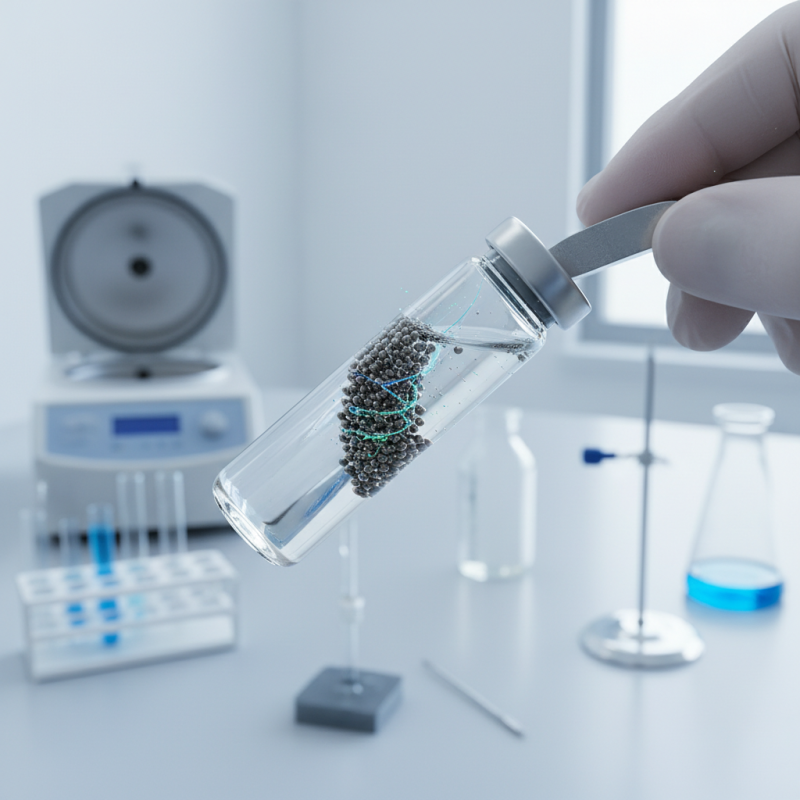
Advantages of DNA Magnetic Beads for Nucleic Acid Purification
DNA magnetic beads offer numerous advantages for nucleic acid purification. They simplify the extraction process, making it faster and more efficient. These beads enable easy binding and separation of DNA from various samples. A simple magnetic field can isolate the beads quickly, saving valuable laboratory time.
Using magnetic beads also reduces contamination risks. Traditional methods often involve multiple steps and handling, increasing chances for errors. With magnetic beads, fewer transfers occur. This reduces human error and enhances the integrity of samples. The recovery rates tend to be higher, but they can vary based on the type of sample used. It's essential to optimize protocols for best results.
Another aspect to consider is the cost-effectiveness of using magnetic beads. While they might have a higher upfront cost, their efficiency can lead to savings in the long run. However, not all users may achieve the same success with these beads. It often requires practice to refine techniques and maximize output. Experimentation with varying conditions is key to understanding their full potential.
Improved Sensitivity and Specificity in DNA Isolation Processes
DNA isolation can be a tricky process. Traditional methods often lead to contamination or poor yields. Many researchers struggle with low sensitivity and specificity. This is where DNA magnetic beads shine. Their unique properties improve these critical aspects significantly.
Magnetic beads provide a more efficient means of isolating DNA. They allow for a more selective binding of the target DNA, reducing unwanted contaminants. This is particularly useful for samples that are complex. In such cases, the beads can capture the desired DNA while leaving behind proteins and other debris. The result is a cleaner product that is easier to work with.
Using these beads can also enhance sensitivity. They are designed to bind DNA tightly, allowing for the recovery of even trace amounts of genetic material. Researchers have observed that this increased sensitivity can lead to more reliable results in experiments. However, handling the beads can require practice. Not getting the right magnetic field strength may lead to a loss of some samples. The learning curve is there, but the benefits often outweigh the challenges.
Top Benefits of Using DNA Magnetic Beads in Molecular Biology
| Benefit |
Description |
Impact on Molecular Biology |
| Improved Sensitivity |
DNA magnetic beads provide superior binding efficiency, allowing for the recovery of low abundant DNA samples. |
Enhances the reliability of PCR and sequencing results, especially in clinical diagnostics. |
| High Specificity |
Magnetic beads can be designed to target specific DNA sequences, minimizing non-specific binding. |
Increases accuracy in applications such as genotyping and gene expression analysis. |
| Quick Isolation Process |
Magnetic beads enable fast separation of DNA from samples, reducing the isolation time significantly. |
Improves throughput in laboratories with high sample volumes. |
| Ease of Use |
The use of magnetic separators simplifies the workflow, making DNA isolation more user-friendly. |
Reduces the risk of contamination and sample loss during isolation. |
| Scalability |
Magnetic bead protocols can be easily scaled up or down, accommodating varied sample sizes. |
Supports both small research projects and large-scale clinical studies. |
Efficient Separation and Recovery of Nucleic Acids Using Magnetic Beads
DNA magnetic beads have revolutionized molecular biology by providing efficient separation and recovery of nucleic acids. These beads use magnetic properties to simplify tedious extraction processes. A recent industry report highlights that magnetic bead-based methods improve nucleic acid yield by over 90% compared to traditional techniques. This efficiency is crucial in research where time and accuracy are paramount.
Using magnetic beads, researchers can isolate DNA and RNA more effectively. The process involves adding beads to the sample, where nucleic acids bind to the surface. Upon applying a magnetic field, the beads are pulled to the side, leaving impurities behind. This method reduces contamination risks and saves considerable time. However, the technique is not without challenges. Beads can sometimes trap enzyme inhibitors, affecting downstream applications.
**Tip**: Ensure proper calibration of the magnetic field to maximize recovery efficiency.
While most protocols are user-friendly, some nuances can be overlooked. For instance, using suboptimal buffer solutions may hinder yields. Regularly assessing your extraction protocol can reveal areas for improvement.
**Tip**: Always validate your method with control samples to confirm effectiveness. The balance between simplicity and optimization is delicate but necessary for successful outcomes in nucleic acid manipulation.
Top Benefits of Using DNA Magnetic Beads in Molecular Biology
This chart illustrates the top benefits of using DNA magnetic beads in molecular biology, emphasizing their efficiency in the separation and recovery of nucleic acids.
Rapid Processing Time Compared to Traditional Methods in Molecular Biology
DNA magnetic beads have transformed molecular biology. One key advantage is their rapid processing time. Traditional methods often involve lengthy protocols, consuming hours or even days. In contrast, magnetic beads streamline these processes significantly.
Using these beads can reduce sample preparation time to just minutes. Researchers can quickly isolate DNA from various samples. This efficiency enables faster experimentation and results. However, the potential for mistakes increases with speed. It's crucial to maintain accuracy even in rapid workflows.
The user-friendly nature of magnetic beads is appealing. They require minimal manual handling, reducing contamination risks. Yet, reliance on these tools may lead to overlooking essential traditional techniques. Balancing innovation with reliable methods is vital. This approach ensures a comprehensive understanding of molecular processes.
Versatility of DNA Magnetic Beads in Various Applications and Protocols
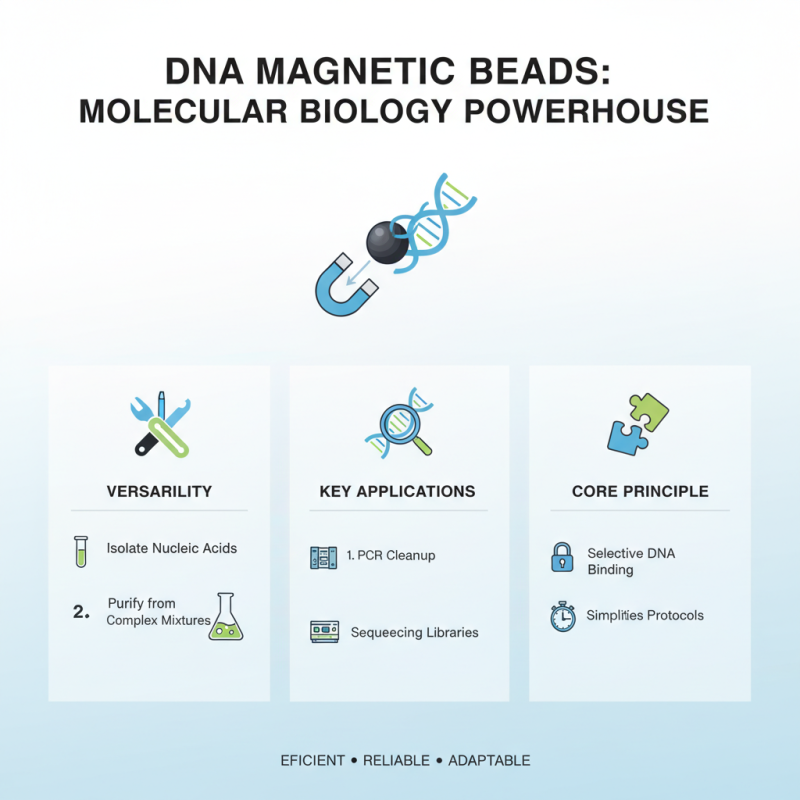
DNA magnetic beads have gained popularity due to their versatility across various molecular biology applications. They can efficiently isolate and purify nucleic acids from complex mixtures. For instance, researchers often use these beads in PCR cleanup and sequencing libraries. Their ability to bind DNA selectively simplifies many protocols.
The workflow is generally straightforward, yet there can be hiccups. Factors like bead size or magnetic properties might affect binding efficiency. Adjusting the salt concentration can yield better results, but it requires careful optimization. Many users report mixed outcomes when working with different sample types. It highlights the need for fine-tuning protocols to achieve desired purity levels.
Beyond purification, these beads are also utilized in gene editing and cloning. They facilitate rapid extraction of plasmids and target sequences. Despite their efficiency, users sometimes encounter issues with DNA yield. A little trial and reflection on the technique often leads to improvements. Diversified applications are impressive, but there’s always room for development in protocols.